Beyond the Cart: How Data Cloud is Rewiring B2B Commerce for the AI Era
The checkout button used to be the finish line. For years, B2B commerce success was measured by whether a buyer could log in, find a product, and complete an order. That era is over.
Today, the real competitive advantage happens before and after the cart: in the intelligence layer that predicts what a buyer needs, when they need it, and how to serve them better than any competitor could. That layer is Salesforce Data Cloud, and its convergence with Salesforce B2B Commerce is fundamentally reshaping how manufacturers, distributors, and MedTech companies operate.
At CLOUDSTREET, headquartered in Houston, Texas, we work with clients locally and across the globe to architect these unified commerce ecosystems. Here’s what forward-thinking technology leaders need to understand about this shift.
The New B2B Reality: Why Yesterday’s Commerce Stack Falls Short
B2B buyers have changed. They’ve experienced frictionless personalization on Amazon, Netflix, and Spotify. They expect the same from their industrial suppliers, medical device vendors, and wholesale distributors.
Yet most B2B organizations are stuck in what we call the “B2B Data Trap.”
The 4 Core Problems of the B2B Data Trap
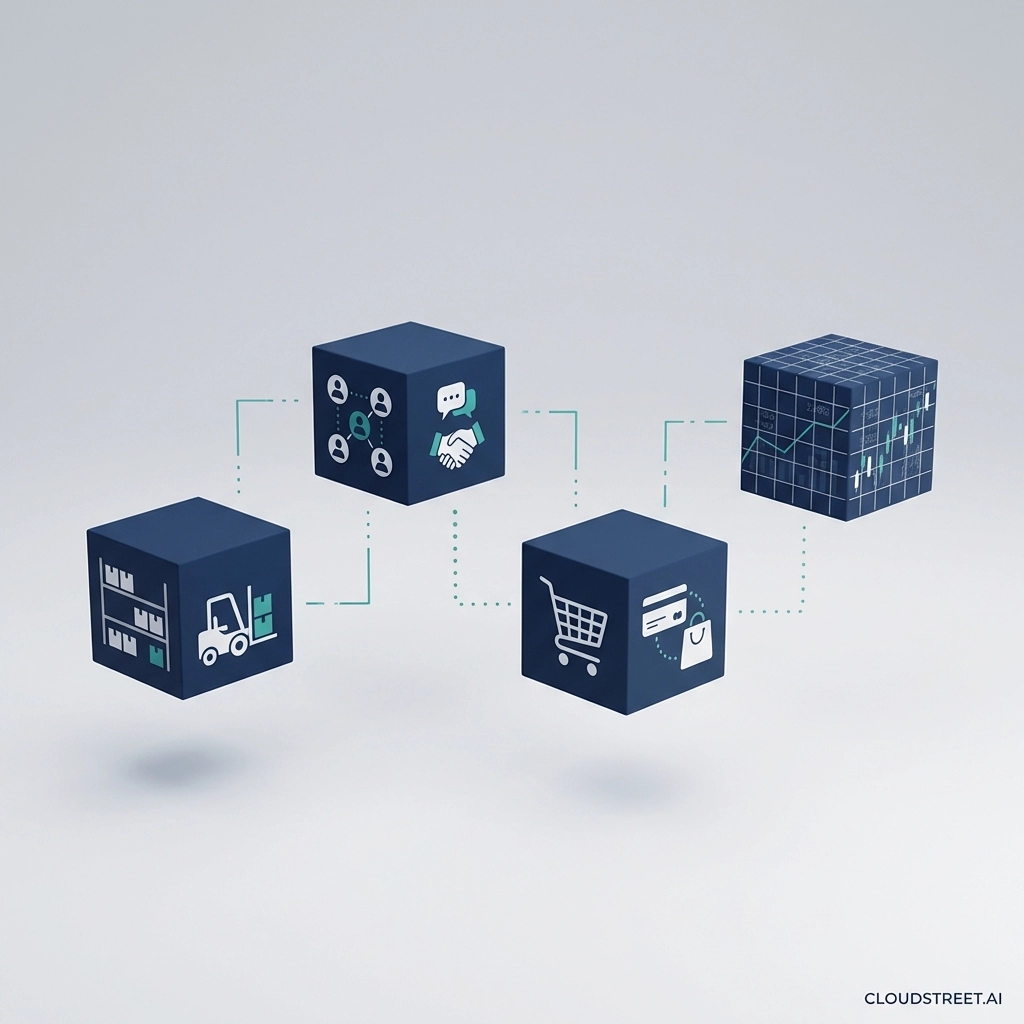
- ERP isolation – Your most valuable transactional data (invoices, credit limits, contract terms, inventory levels) lives locked inside SAP, Oracle, or Microsoft Dynamics
- CRM fragmentation – Customer engagement history, support tickets, and sales interactions sit in Salesforce but never connect to purchasing behavior
- Commerce blindness – Your storefront captures browsing and buying patterns but can’t access the context needed to personalize experiences
- Manual workarounds – Teams export spreadsheets, build shadow databases, and make decisions on outdated information
The result? Personalization becomes impossible. Your best customer sees the same homepage as a first-time visitor. Your sales team doesn’t know a major account is about to churn until it’s too late.
Ready to break free from data silos? Connect with our Salesforce architects to map your integration roadmap.
The Solution: A “Data 360” Approach to Unified Commerce
Salesforce Data Cloud changes the game by serving as the connective tissue between your entire technology ecosystem.
Here’s the architectural reality: Data Cloud ingests information from your ERP, harmonizes it with CRM data, processes real-time engagement signals, and delivers what Salesforce calls “Calculated Insights” directly into the B2B Commerce storefront.
How Data Cloud Transforms B2B Personalization in 5 Ways
- Unified customer profiles – Combine transactional history, service interactions, marketing engagement, and commerce behavior into a single, actionable view
- Real-time processing – React to customer actions instantly rather than relying on overnight batch jobs
- Predictive intelligence – Surface insights like churn risk, next best action, and reorder recommendations automatically
- Cross-channel consistency – Ensure sales reps, service agents, and commerce storefronts all see the same customer context
- AI-ready foundation – Provide the clean, unified data that Einstein and Agentforce need to deliver meaningful automation
This isn’t about dashboards for executives. It’s about embedding intelligence directly into the buyer experience: dynamically adjusting pricing, surfacing relevant products, and triggering proactive outreach based on calculated signals.
For organizations exploring how AI and commerce intersect, our analysis of agentic commerce dives deeper into these emerging capabilities.
Real-World Proof: 3 Organizations Leading the Data-Driven Commerce Revolution
Theory is useful. Results are better. Let’s examine three organizations that have operationalized this convergence.
Formula 1: The “Fan 360” Profile
Formula 1 faces a unique challenge: their customers engage across merchandise stores, race ticketing, streaming platforms, and hospitality experiences. Previously, each channel operated independently.
By implementing a unified “Fan 360” profile, F1 now connects what a fan watches with what they buy. If you stream every Ferrari race, the commerce experience adapts: surfacing team merchandise, suggesting hospitality packages for upcoming European races, and personalizing content based on your proven interests.
The outcome? Significantly higher merchandise conversion rates driven by contextual relevance rather than generic promotions.
Ecolab: Modernizing Complex B2B Buying Cycles
Ecolab, a global leader in water, hygiene, and infection prevention, faced the classic B2B complexity problem. Their customers required technical specifications, custom pricing, and often sales-assisted purchasing journeys.
By connecting their commerce platform to their wider data ecosystem through Data Cloud, Ecolab achieved remarkable results:
- 74% conversion rate for sales-assisted orders
- $1.8 billion in revenue flowing through the platform
- Dramatic reduction in quote-to-order cycle times
This wasn’t about replacing sales teams: it was about arming them with the context and automation to serve customers faster.
Salesforce Internal: Practicing What They Preach
Salesforce uses this same architecture for their own partner ecosystem, managing software procurement and dynamic contract pricing for thousands of partners worldwide. The system automatically adjusts pricing based on partner tier, historical volume, and contractual commitments: all powered by unified data flowing through Data Cloud.
The Architecture: Building a Data-Driven Distributor
Let’s make this concrete. Here’s how a typical manufacturing or distribution company can implement this pattern.
The 3-Step Data Flow for Intelligent Commerce
Step 1: ERP Integration
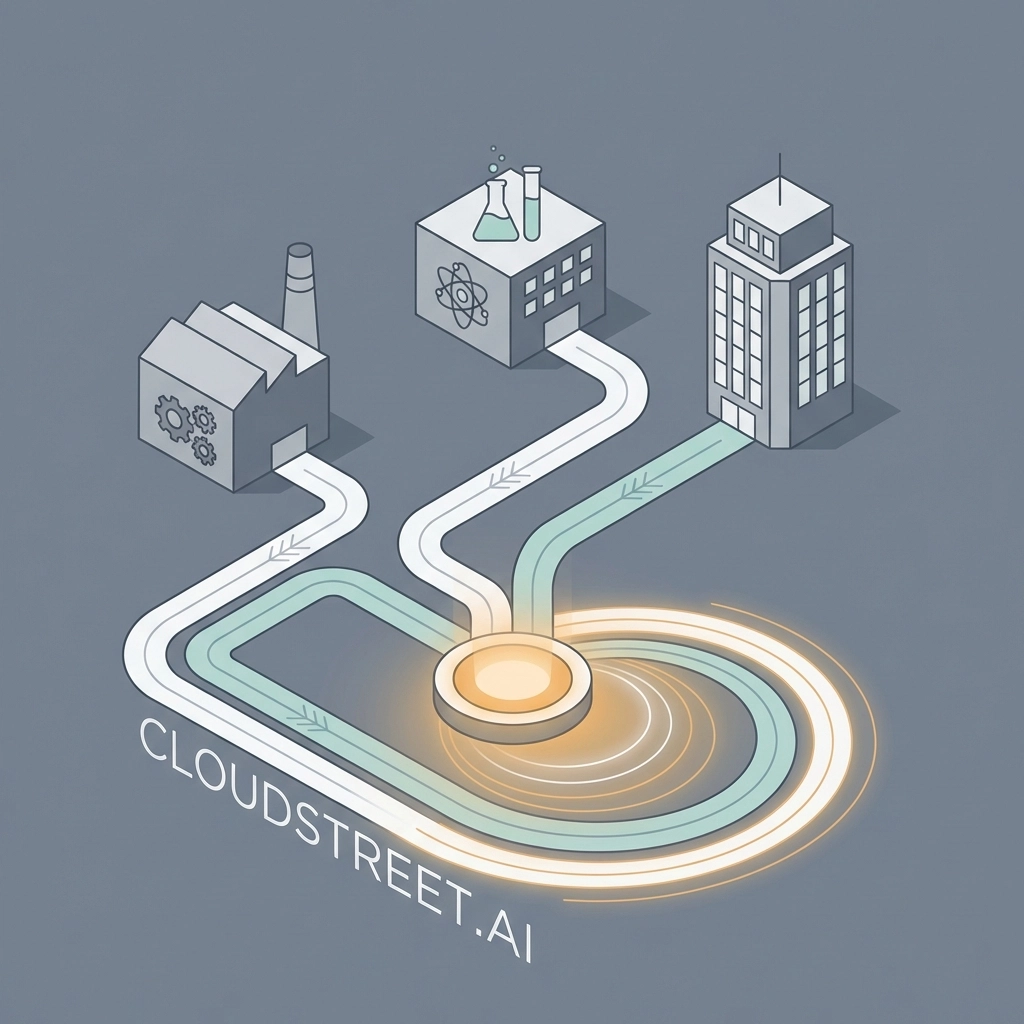
Your ERP feeds invoice history, inventory levels, credit limits, and contract terms into Data Cloud. This happens through standard connectors or MuleSoft integration: not custom point-to-point connections that break with every upgrade.
Step 2: Calculated Insights
Data Cloud processes this information alongside CRM engagement data and commerce browsing behavior. It calculates actionable insights: “This customer typically reorders every 45 days. They’re now at day 52 with declining inventory.”
Step 3: Storefront Personalization
When that customer logs into your B2B Commerce storefront, they see a dynamic banner: “Time to restock Kit A: your usual quantity is ready for one-click reorder.” No manual intervention required.
This same pattern extends to pricing (displaying contract-specific rates automatically), product recommendations (surfacing complementary items based on purchase history), and service (alerting support teams when a high-value account shows signs of friction).
Want to see this architecture in action? Our work with Trion Industries demonstrates how manufacturers are implementing these capabilities today.
For organizations already running Salesforce B2B Commerce, our guide on customized implementation approaches covers how to extend existing storefronts with Data Cloud capabilities.
The Future: Why Agentforce Needs Data Cloud First
Here’s the uncomfortable truth many organizations are discovering: you cannot build successful AI agents without a unified data foundation.
Agentforce: Salesforce’s autonomous AI agent platform: represents the next evolution of B2B commerce. These agents can:
- Analyze purchasing patterns and predict inventory needs automatically
- Suggest alternative products when items are unavailable
- Handle routine customer inquiries without human intervention
- Even negotiate pricing within defined parameters
But none of this works without Data Cloud.
The 3 Reasons AI Agents Fail Without Unified Data
- Context poverty – An agent can’t recommend the right product if it doesn’t know what the customer has purchased historically, what’s in their contract, and what their current inventory situation looks like
- Inconsistent responses – Without unified profiles, agents give different answers depending on which data source they happen to access
- Trust erosion – Customers quickly lose confidence in AI that makes irrelevant suggestions or contradicts what sales reps have told them
The organizations winning with Agentforce in 2026 and beyond are the ones investing in Data Cloud today. The unified data layer isn’t a nice-to-have: it’s the prerequisite for meaningful AI automation.
Key Takeaways: 6 Insights for Technology Leaders
- The “B2B Data Trap” is real – Valuable customer data locked in ERP and CRM silos makes true personalization impossible without a unification strategy
- Data Cloud is the bridge – It harmonizes transactional, engagement, and behavioral data into unified profiles that power intelligent commerce
- Results are proven – Organizations like Ecolab are driving 74% conversion rates and billions in platform revenue through connected commerce
- Architecture matters – The ERP → Data Cloud → Storefront pattern delivers personalization without custom development nightmares
- AI readiness requires data readiness – Agentforce and autonomous commerce capabilities depend entirely on having unified, clean, real-time customer data
- Start now, scale later – Begin with a focused use case (like reorder recommendations) and expand as your data foundation matures
Your Next Move
The convergence of Salesforce B2B Commerce and Data Cloud isn’t a future trend: it’s happening now. Organizations that delay building their unified data foundation will find themselves increasingly unable to compete on customer experience, unable to leverage AI capabilities, and stuck serving buyers with the same generic experiences they could get anywhere.
At CLOUDSTREET, we help manufacturing, distribution, and MedTech companies across Houston and around the world architect these modern commerce ecosystems. Whether you’re evaluating Data Cloud for the first time or looking to extend an existing B2B Commerce implementation, our Salesforce architects can help you build a roadmap that delivers measurable business outcomes.
Schedule a strategy session to explore how unified data can transform your B2B commerce operation.
Category
Discover insights that drive results - explore out latest blog posts now
Case Study: How Highland Cabinetry Colorado Built a Modern Wholesale Powerhouse on Salesforce B2B Commerce Cloud
In the world of high-end cabinetry, timing is everything. When [...]
Agentforce ROI: 7 Ways to Maximize Your Salesforce AI Investment
You've heard the buzz. Salesforce Agentforce is supposed to revolutionize [...]
Salesforce B2B Commerce Cloud Partner & Consultant Guide
You're about to drop serious money on a Salesforce B2B [...]