The Real Cost of Implementing Salesforce (and How to Get Your ROI Faster)
If you’re reading this, you’ve probably already had the “Salesforce Talk.” You know, the one where someone in leadership says we need a “single source of truth,” and then everyone looks at the price tag and starts sweating.
As a business leader in manufacturing or wholesale, you aren’t just buying software; you’re buying a way to stop losing leads and start scaling operations. But here’s the kicker: asking “How much does Salesforce cost?” is actually the wrong question. It’s like asking how much a house costs. Are we talking about a pre-fab shed or a custom-built estate in River Oaks?
At CLOUDSTREET, we’re based in the heart of Houston, Texas, but we work with manufacturers and wholesalers across the globe to turn those “expensive” licenses into ROI-generating machines. Whether you’re a local shop or a global distributor, the math is the same. The real question is: “How much will this implementation return to my bottom line, and how fast?”
Let’s pull back the curtain on the actual investment required to get Salesforce up and running, and how to make sure you aren’t just renting an expensive digital filing cabinet.
1. The 3 Levels of Salesforce Licensing (And the New “Foundations”)
Before we even talk about implementation, you have to pay the “cover charge” to get into the party. Salesforce changed the game recently by simplifying some of their offerings, but the core Clouds remain the heavy hitters for B2B businesses.
- Sales Cloud: The bread and butter. This is where your deals live.
- Service Cloud: Essential for manufacturers who need to track warranties, repairs, and customer support.
- Marketing Cloud: For when you want to stop “spraying and praying” and start sending targeted, automated emails that actually convert.
The New Kid on the Block: Salesforce Foundations
Salesforce recently introduced “Foundations,” a way for mid-market companies to get a taste of Sales, Service, and Marketing all in one UI without the enterprise-level price tag. It’s great for getting started, but if you have complex shipping rules or intricate B2B pricing, you’ll likely need the Pro or Unlimited tiers to handle the heavy lifting.
AI-Ready Tiers: If you’re eyeing the new AI capabilities (like Agentforce), you’re looking at the “Unlimited” or “Einstein 1” editions. Yes, they cost more, but they are built to automate the tedious stuff that usually burns your reps’ time.

2. The 5 “Hidden” Costs That Can Blow Your Budget
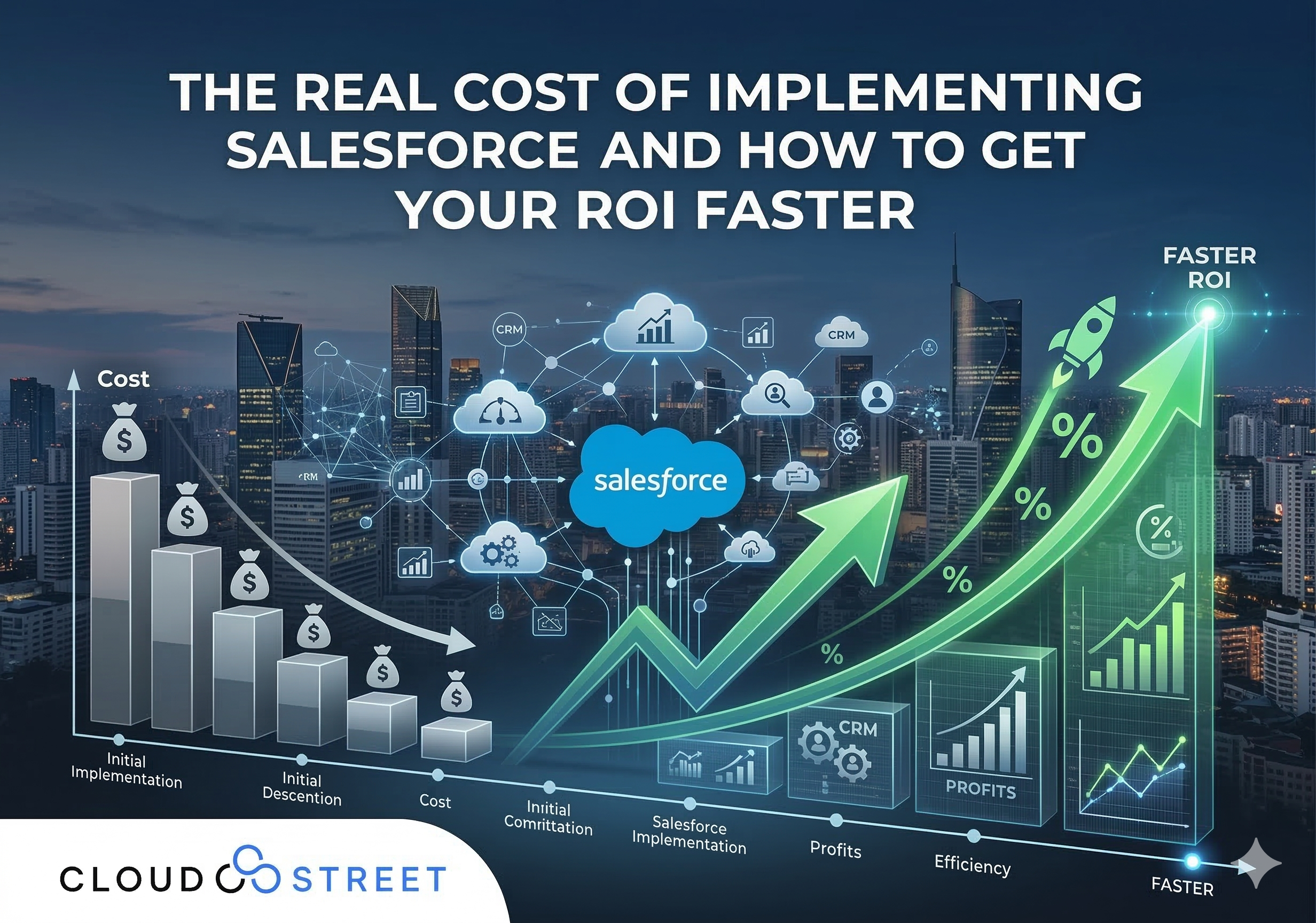
Most people look at the license fee and think that’s 80% of the cost. In reality, the license fee is usually only about 30% of the total investment in the first year. Based on industry data, you should expect to spend $2 to $3 on implementation for every $1 you spend on licenses.
Here are the 5 areas where that money actually goes:
1. Customization (It’s Not Just “On/Off”)
Salesforce out-of-the-box is like a block of marble. It has the potential to be a masterpiece, but someone has to do the carving. For a manufacturer, this means setting up custom objects for “Line Sheets,” “Distributor Tiers,” or “Freight Calculations.” If you try to force your business into a default Salesforce template, your team will hate using it.
2. Data Migration: Don’t Move Your Mess to a New House
This is the single biggest “budget killer.” If your current customer data is a mess of Excel sheets and legacy ERP exports, cleaning that up takes time. Moving “dirty” data into a new Salesforce instance is like moving all the junk from your old garage into your brand-new custom home. We highly recommend a Salesforce implementation partner to handle the heavy lifting of data mapping and cleansing.
3. Adoption and Training
If your sales reps don’t use Salesforce, you’re just lighting money on fire. Training isn’t a one-hour Zoom call; it’s a change management process. You need to budget for documented “Playbooks” and hands-on sessions. As we say in Houston, you can lead a horse to water, but you can’t make it log its calls in CRM: unless you make it easy for them.
4. Integration (The ERP Factor)
For wholesalers, Salesforce is only half the story. The real magic happens when it talks to your back-office systems. Whether it’s a Salesforce Sage Intacct integration or connecting to a custom warehouse management system, making these systems “talk” is a specialized skill that requires a bit of an investment up-front but saves thousands in manual data entry later.
5. Post-Launch Support
Salesforce isn’t a “set it and forget it” tool. As your business grows, you’ll need new reports, new automations, and updates to keep up with Salesforce’s three-times-a-year release cycle. Many companies opt for staff augmentation to have an expert on call without hiring a full-time $150k/year admin.
3. Agentforce: The Latest ROI Power Move
You’ve probably heard the buzz about Agentforce. This isn’t just another chatbot; it’s an autonomous AI agent that can actually do things.
For a mid-market manufacturer, Agentforce can handle things like:
- Checking order status for a distributor at 2 AM.
- Qualifying a lead from a trade show while your sales team is still at the airport.
- Updating inventory levels across your storefront.
While there is a cost associated with AI credits and setup, the ROI comes from headcount efficiency. If Agentforce can handle 40% of your basic customer inquiries, your service team can focus on high-value problem solving instead of “Where is my tracking number?”
Ready to see how AI can impact your specific bottom line? Check out our case studies to see how we’ve helped businesses automate the boring stuff.

4. Why “DIY” Salesforce is the Most Expensive Option
We see it all the time. A company tries to save money by having their “tech-savvy” IT manager or a junior sales op person set up Salesforce. Six months later, the data is a mess, nobody is using the system, and they call us to fix it.
The cost to fix a bad implementation is always higher than the cost to do it right the first time.
Working with a Salesforce consultant like CLOUDSTREET ensures:
- Speed to Value: We get you live in weeks, not months.
- Best Practices: We know which features are worth using and which are just “fluff.”
- Integration Expertise: We specialize in making Salesforce work with your existing tech stack, like we did in this LaMotte Case Study.
5. Breaking Down the Numbers: What Should You Budget?
While every project is different, here’s a ballpark of what you can expect for a professional implementation:
- Small Business/Quick Start: $10,000 – $25,000. Best for companies with simple processes and a handful of users.
- Mid-Market (Manufacturers/Wholesalers): $30,000 – $85,000. This usually includes ERP integrations, custom sales processes, and data migration.
- Enterprise/Complex: $100,000+. This covers multiple business units, complex security models, and advanced AI/Agentforce deployments.

Final Thoughts: Focus on the Return, Not Just the Check
At the end of the day, Salesforce is an investment in your company’s infrastructure. If a $50,000 implementation helps your sales team close 10% more deals or reduces your order processing time by 20%, the system pays for itself in less than a year.
Based in Houston, Texas, the CLOUDSTREET team is here to help you navigate these costs and find the most direct path to ROI. We don’t just “install software”: we build systems that help manufacturers and wholesalers win.
Want a real quote tailored to your business?
- Browse our Salesforce Services.
- Read what our clients say, like Michael McLaughlin.
- Or contact us today to start the conversation.
Stop guessing about costs and start planning for growth. Let’s get to work.

Category
Discover insights that drive results - explore out latest blog posts now
The 99% Problem: Why Your CRM Is Missing Most of Your Customer Conversations
In modern enterprise sales, organizations invest heavily in robust customer [...]
Beyond Punch Cards: Building a Scalable Loyalty Strategy with Salesforce Loyalty Management
For decades, "customer loyalty" was synonymous with the humble punch [...]
5 Signs You’ve Outgrown Your CRM (And What to Do About It)
At CloudStreet, we often tell our clients that outgrowing your [...]