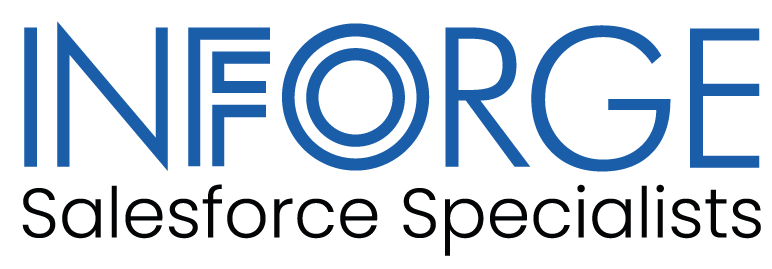
Considering AvSight? How to Protect Your Salesforce Data and Independence : 7 Pre-Contract Checks
If your aviation or MRO company is evaluating AvSight as an ERP and operations platform, there is one licensing decision worth making before signing the contract:
We recommend buying Salesforce directly first, even if you purchase only one administrative or core Sales Cloud license.
This is not a criticism of AvSight’s aviation functionality. AvSight is a purpose-built platform for aviation suppliers, distributors, and MRO organizations. It is built on Salesforce, which gives it a powerful foundation for data, automation, reporting, and integrations.
The issue is the underlying Salesforce commercial relationship.
AvSight’s own website confirms that it is an OEM Salesforce partner and that “all AvSight subscriptions include OEM Salesforce licensing.” That arrangement can be convenient for companies that do not already use Salesforce. However, it can also create long-term ownership and portability risks that executive teams should be aware of before implementation begins.
At CloudStreet, we help organizations implement ROI into their Salesforce environments. We are based in Houston, Texas, and support customers locally and globally. We have seen how difficult it can be for companies to regain control after their critical business processes and data have been placed inside an OEM-managed Salesforce org.
Key Takeaway: Buy Salesforce Before AvSight
If your company does not already own a direct Salesforce org, we recommend purchasing a direct Salesforce license before signing an AvSight agreement.
That initial license can be as limited as one administrative or core Sales Cloud license, depending on Salesforce’s current commercial requirements. The objective is to establish an org directly owned by your company.
AvSight can then be installed into that company-owned org as a standard managed package under the ISVforce model, rather than as the foundation of an OEM/reseller-provisioned environment.
If you are reviewing an AvSight proposal now, Schedule a Call with CloudStreet before finalizing the order form. A short architecture and licensing review can help your team avoid a major strategic misstep.
1. Understand an Important AvSight OEM Salesforce Licensing Consideration
AvSight is not simply an external ERP that connects to Salesforce through an API. It is a Salesforce-native aviation application. According to AvSight’s Salesforce overview, Salesforce provides the platform foundation on which AvSight runs.
AvSight also explains in its pricing FAQ that its subscriptions include an OEM Salesforce license and that customers do not need to purchase a separate Salesforce license to use AvSight.
That sounds straightforward, and for some companies, it may be. But there is an important distinction between:
- An OEM Salesforce environment provisioned through AvSight
- A Salesforce org directly owned and contracted by your company
If your organization does not already have Salesforce, AvSight may provision a new environment under an OEM or reseller contract. In that arrangement, AvSight owns the root Salesforce commercial relationship. Your company receives access through the AvSight subscription rather than through a direct Salesforce agreement.
The AvSight application may work exactly as promised. Your users may be able to manage inventory, purchasing, sales orders, repair processes, work orders, quotes, and aviation-specific workflows. The key consideration is what happens to the broader Salesforce environment if the AvSight relationship ends.

2. Recognize the 3 Executive-Level Considerations
1. Vendor lock-in and potential access risk
Under an OEM Salesforce contract, your access to the underlying Salesforce environment is tied to the OEM partner relationship.
If your company later decides to stop using AvSight, changes ERP strategy, or terminates the agreement, access to the Salesforce environment provisioned under that agreement can be at risk. That can include much more than the AvSight application itself:
- CRM history and account records
- Custom workflows, flows, and approvals
- Reports, dashboards, and automation
- Custom objects, fields, and configuration
- Integrations and connected processes
- Historical operational and customer data
For an aviation or MRO organization, this is not merely a software subscription issue. Your Salesforce environment may eventually contain years of customer interactions, supplier records, pricing logic, maintenance workflows, order history, compliance-related information, and institutional knowledge.
That kind of access disruption can create significant business disruption and a costly migration project.
2. Contractual blockers to expanding Salesforce independently
A second risk involves future Salesforce purchases.
A Salesforce Account Executive may not be able to sell standard direct Sales Cloud or Service Cloud licenses into an org that is managed under an OEM/reseller contract. This can prevent your company from simply expanding the org through a traditional direct Salesforce relationship later.
That matters if your leadership team eventually wants to:
- Add unrestricted Sales Cloud functionality
- Deploy Service Cloud for customer support
- Introduce broader CRM processes
- Add Salesforce-native applications
- Build new customer or supplier portals
- Use additional automation, analytics, or AI capabilities
AvSight’s pricing FAQ specifically notes that its OEM license restricts certain Salesforce functionality, including examples such as Opportunities, while not restricting the AvSight application itself.
The result is a platform that may be highly capable for AvSight operations but less flexible as a general-purpose Salesforce foundation.
3. A ceiling on innovation and data strategy
The third risk is strategic.
Many aviation businesses initially buy an ERP to solve an operational problem. Over time, however, leadership often wants a connected platform spanning sales, service, commerce, finance, supply chain, customer portals, analytics, and artificial intelligence.
If your company does not own the underlying Salesforce org, your ability to pursue that broader roadmap may depend on the OEM partner’s contract structure, product roadmap, permissions, and willingness to support additional Salesforce capabilities.
That can limit your ability to:
- Add Salesforce applications and agents
- Create independent integrations
- Expand customer and partner experiences
- Use your data across new business processes
- Change implementation partners
- Develop a long-term enterprise architecture
This is a Salesforce reseller consideration worth being aware of: the solution may meet today’s requirements while restricting tomorrow’s options.
3. Apply the Golden Rule: Buy Salesforce Before AvSight
The solution is straightforward, but the sequence matters:
We recommend purchasing a direct Salesforce license first, then having AvSight installed into the Salesforce org owned by your company.
You do not necessarily need to purchase a large number of Salesforce licenses. Depending on Salesforce’s current rules and commercial requirements, one administrative or core Sales Cloud license may be enough to establish the direct relationship.
The important point is not the initial user count. The important point is ownership of the org.
Before signing your AvSight contract, ask Salesforce to confirm in writing:
- The Salesforce org is contracted directly to your company.
- Your company is the customer of record for that org.
- AvSight will be installed as a managed package.
- The planned AvSight implementation will not require an OEM-provisioned org.
- Your company can add Salesforce products and compatible applications independently.
- Your data and configuration remain in the company-owned org if AvSight is later removed.
If you want an independent review of your proposed architecture, Contact Our Team at CloudStreet.
4. Know Why the ISVforce Model Changes the Outcome
The difference between the OEM model and the ISVforce model is fundamental.
Under the OEM model:
- The partner bundles Salesforce platform licensing with its application.
- The partner controls the root Salesforce contract.
- The customer’s access is primarily tied to the partner’s application and agreement.
- Certain standard Salesforce capabilities may be restricted.
Under the ISVforce model:
- The customer already owns a Salesforce org.
- The software vendor provides a managed package installed into that org.
- The customer maintains the direct Salesforce relationship.
- The customer owns the org, data, configuration, and broader platform strategy.

This is why the sequence matters. Buying Salesforce after signing an OEM agreement may not solve the problem. The Salesforce org may already be provisioned under the OEM structure, and a Salesforce Account Executive may not be able to convert that environment into a standard direct org.
Establish the company-owned Salesforce org first. Then install AvSight on top of it.
5. Complete This 7-Point Pre-Contract Recommendation Checklist
Before approving an AvSight purchase, your executive, legal, procurement, and IT teams should confirm:
- Who owns the Salesforce org?
Is the org contracted directly to your company or provisioned through AvSight? - Who owns the root Salesforce agreement?
Do you have a direct contract with Salesforce, or is Salesforce licensing bundled into the AvSight subscription? - What happens if AvSight is terminated?
Obtain a clear written explanation of your access to the org, data, configuration, and backups. - Can Salesforce sell direct licenses into the org later?
Ask Salesforce: not only the software vendor: to confirm the answer. - Can you install other Salesforce products and managed packages?
Confirm your ability to add Sales Cloud, Service Cloud, Experience Cloud, AI capabilities, and other applications. - Can another implementation partner support the environment?
Your business should not be dependent on one vendor for every future Salesforce change. - What is the exit and migration process?
Document data export rights, metadata access, retention periods, transition support, and responsibilities at termination.
If these answers are unclear, it may be worth pausing the purchase process. Get a Quote from CloudStreet for an independent Salesforce architecture review, licensing assessment, or implementation plan.
6. Preserve the Platform Options Your MRO May Need
AvSight can provide a strong operational foundation for aviation businesses. CloudStreet has worked on Salesforce and AvSight initiatives involving aviation parts distribution, B2B commerce, real-time inventory visibility, quoting, backorders, and customer self-service.
Our AvSight and Salesforce integration case study illustrates how a unified Salesforce-based architecture can connect aviation operations with digital commerce and customer-facing processes.
The goal is not to avoid AvSight. The goal is to avoid unintentionally purchasing AvSight in a way that could limit the rest of your enterprise architecture.
A company-owned Salesforce org can provide a foundation for future capabilities such as:
- Customer and supplier portals
- Service and case management
- B2B Commerce
- Advanced reporting and analytics
- Automated approval and fulfillment workflows
- AI assistants and agents grounded in company data
For example, Salesforce AI and Agentforce capabilities can support customer service, sales productivity, commerce, and workflow automation. But your ability to use those capabilities should be evaluated within an org your company controls. Learn more on our Salesforce Artificial Intelligence page.

7. Make Org Ownership an Executive Decision
Salesforce licensing is often left to procurement or implementation teams. In an AvSight ERP Salesforce decision, we recommend treating it as an executive-level consideration.
The org ownership question affects:
- Enterprise risk
- Data governance
- Vendor strategy
- Future technology investments
- Exit costs
- Business continuity
- Long-term digital transformation
The right question is not simply, “Does AvSight include Salesforce licensing?”
The right question is:
“Will our company own the Salesforce org on which our aviation operations, data, workflows, and future applications depend?”
Conclusion: A Practical Recommendation Before Signing
AvSight’s OEM Salesforce model can simplify the initial purchase for companies that do not already use Salesforce. But implementation convenience should be weighed against long-term platform independence.
Before signing an AvSight contract, we recommend buying Salesforce directly first and establishing an org owned by your aviation company. Then have AvSight installed as a managed package under the ISVforce model.
That approach gives your organization greater control over its data, customizations, integrations, Salesforce applications, and future roadmap. If your company ever changes ERP vendors or moves away from AvSight, you retain the Salesforce environment and the business information built inside it.
CloudStreet is based in Houston, Texas, with customers locally and globally. We help aviation, MRO, distribution, and other complex businesses implement Salesforce for measurable ROI while preserving a practical, scalable technology strategy.
Schedule a Call before you sign. We can review your AvSight Salesforce licensing structure, validate org ownership, and help you establish the right foundation from day one.
Category: Blog
Category
Discover insights that drive results - explore out latest blog posts now
DealHub Salesforce Integration for Manufacturers: Connecting CPQ, Contracts, and CRM
About the manufacturer: mid-market industrial equipment company A U.S.-based, mid-market [...]
Salesforce Data 360 and Agentforce: Why Grounding Is What Makes AI Agents Dependable
An AI agent can produce a fluent answer and still [...]
Salesforce Data 360 Governance and Informatica: Managing Data Quality, Access, and Trust in the Agentic Era
Data governance becomes more consequential when business data does more [...]