Why Manufacturers Need Salesforce B2B Commerce Cloud: A Modern Roadmap for Digital Success
The manufacturing industry is at a crossroads. Buyers now expect the same seamless digital experiences they get from consumer retail: but with the complexity that B2B demands. Spreadsheet-based ordering, phone-tag with sales reps, and manual quote requests are quickly becoming relics of the past.
For manufacturers ready to modernize, Salesforce B2B Commerce Cloud offers a purpose-built solution that handles the unique challenges of industrial sales. At CloudStreet, based in Houston, Texas, we work with manufacturing clients locally and across the globe to transform their digital commerce operations. Here’s why this platform deserves your attention: and how to approach implementation the right way.
The Digital Challenge Facing Manufacturers Today
Manufacturing isn’t like selling t-shirts online. Your products come with complex specifications, tiered pricing agreements, bulk ordering requirements, and intricate approval chains. Your customers expect contract-based pricing, flexible payment terms, and the ability to reorder thousands of SKUs with minimal friction.
Traditional ecommerce platforms weren’t built for this. They struggle with large catalogs, account hierarchies, and the tight ERP integrations that manufacturers depend on. The result? Clunky workarounds, frustrated customers, and sales teams stuck doing manual data entry instead of closing deals.

Why Standard Ecommerce Platforms Fall Short: 5 Key Limitations
Before diving into solutions, let’s be clear about what manufacturers are up against when using generic ecommerce tools:
- Limited product data handling – Consumer platforms can’t manage complex BOMs, technical specifications, or configurable products without heavy customization.
- No native account hierarchies – B2B buyers often operate across multiple locations with different purchasing permissions. Standard platforms treat every user the same.
- Rigid pricing models – Contract pricing, volume discounts, and customer-specific catalogs require workarounds that break easily.
- Weak integration capabilities – Connecting to ERP systems like SAP, Oracle, or Microsoft Dynamics becomes a development nightmare.
- Missing approval workflows – Large purchases need sign-off from multiple stakeholders. Most platforms don’t support this out of the box.
These gaps cost manufacturers time, money, and customer relationships. If this sounds familiar, it’s time to consider a platform designed specifically for B2B complexity.
Ready to explore what’s possible? Schedule a discovery call with CloudStreet to discuss your specific manufacturing challenges.
How Salesforce B2B Commerce Cloud Solves These Challenges: 8 Key Capabilities
Salesforce B2B Commerce Cloud was engineered for the realities of industrial and wholesale selling. Here’s what sets it apart:
- Mega shopping carts and bulk ordering – Your customers can add hundreds or thousands of line items without performance issues. The platform handles high-volume transactions that would crash consumer-focused solutions.
- Advanced approval workflows – Configure multi-level approval chains that match your customers’ internal processes. Large orders automatically route to the right decision-makers.
- Contract-based and tiered pricing – Support customer-specific pricing agreements, volume discounts, and negotiated rates: all managed within the platform.
- Flexible payment options – Accept purchase orders, ACH transfers, credit terms, and traditional payment methods. Split shipments and multiple delivery dates are standard features.
- Native CRM integration – Because it’s Salesforce, your commerce data flows directly into Sales Cloud and Service Cloud. Your sales team gets a complete 360-degree view of every account.
- AI-powered recommendations – Salesforce Einstein analyzes purchasing patterns to suggest relevant products, predict reorder timing, and personalize the buying experience.
- Account hierarchies and permission sets – Model complex organizational structures with parent-child account relationships and granular user permissions.
- Quick reorder functionality – Repeat customers can reorder previous purchases in just two clicks: critical for manufacturing relationships built on recurring orders.
These capabilities translate to real results. Manufacturers using Commerce Cloud report 27% higher conversion rates and 40% performance improvements compared to legacy systems.
The Integration Imperative: Connecting ERP, CRM, and Commerce
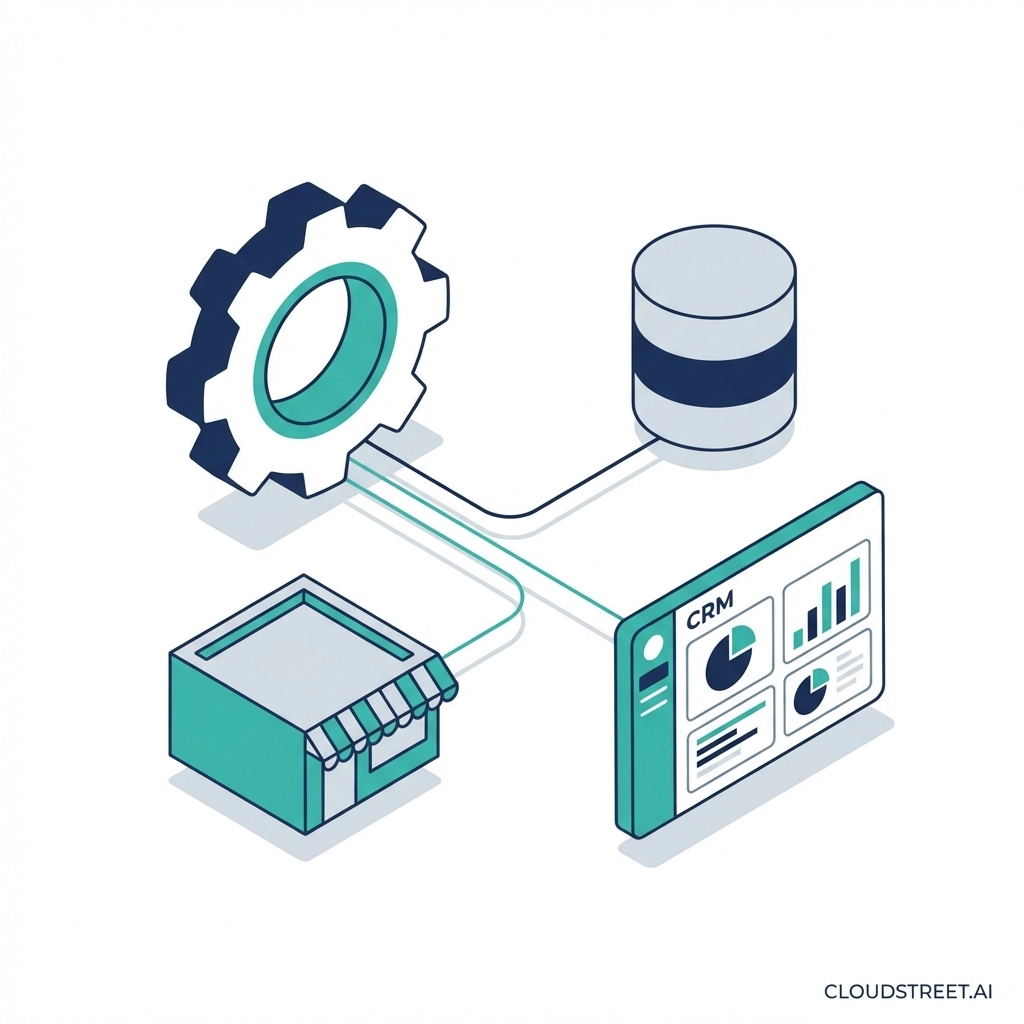
For manufacturers, ecommerce doesn’t exist in a vacuum. Your commerce platform must talk to your ERP for inventory and pricing, your CRM for customer data, and potentially your CPQ system for complex quotes.
Salesforce B2B Commerce Cloud excels here because integration is built into its DNA. The platform connects natively with:
- Salesforce CRM for unified customer records
- Major ERP systems through MuleSoft and pre-built connectors
- CPQ tools for configure-price-quote workflows
- Service Cloud for post-sale support
This connectivity eliminates the data silos that plague manufacturers. When a customer places an order online, your sales team sees it immediately. When inventory changes in your ERP, your storefront updates in real time. When a service ticket is opened, the agent has full order history at their fingertips.
Want to understand how integration works for your specific tech stack? Check out our guide on connecting enterprise systems or reach out to our team directly.
Real Results: How Trion Industries Transformed Their Customer Experience
Theory is great, but results matter more. Let’s look at a real manufacturer who made the switch.
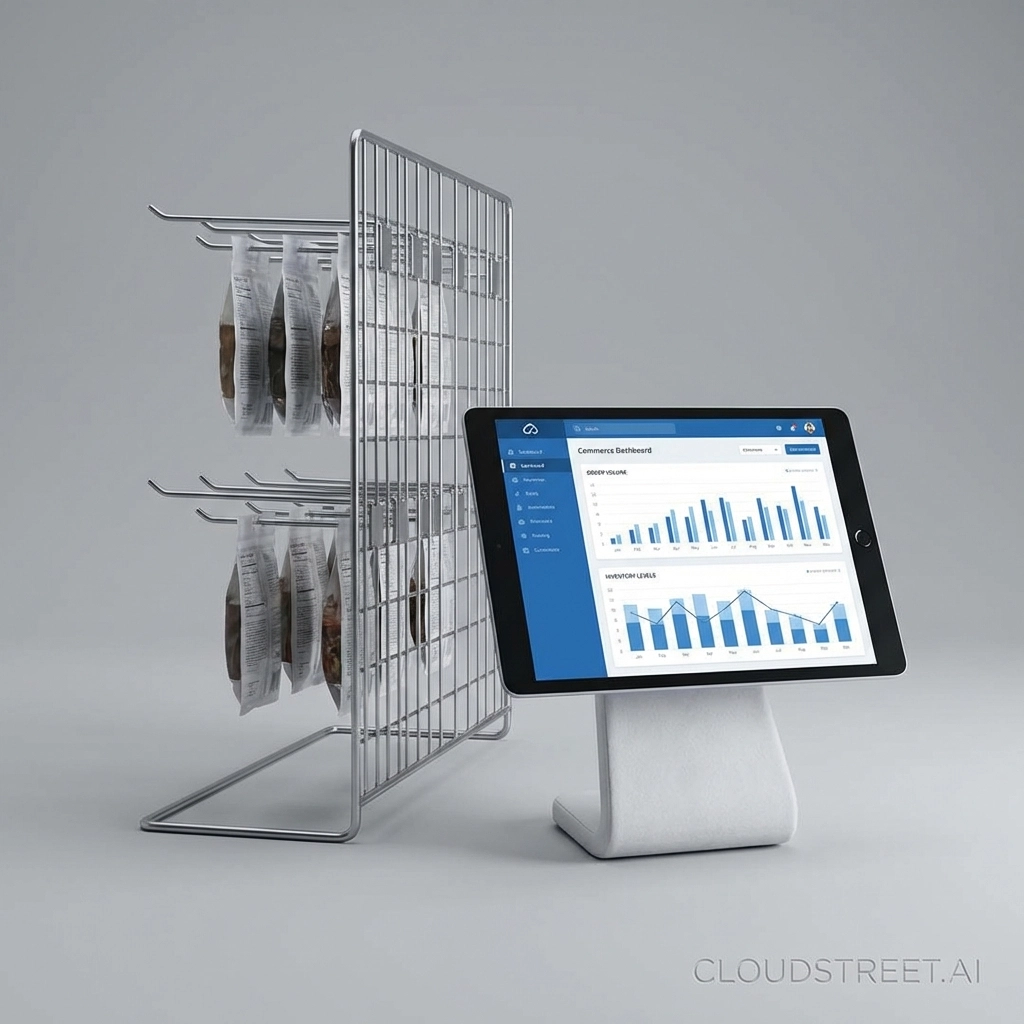
Trion Industries, a leading manufacturer of retail display and merchandising products, faced growing pressure to modernize their ordering process. Their customers: retailers and distributors: needed faster, more convenient ways to browse catalogs, check pricing, and place orders.
By implementing Salesforce B2B Commerce Cloud, Trion launched a new era of customer service. The platform gave their buyers 24/7 access to product information, real-time inventory visibility, and self-service ordering capabilities. Their sales team shifted from order-takers to strategic advisors, focusing on relationship-building instead of manual data entry.
Read the full Trion Industries case study here.
Implementation Roadmap: A Phased Approach in 4 Stages
Successful B2B commerce implementations don’t happen overnight. Here’s the phased approach we recommend at CloudStreet:
Stage 1: Discovery and Planning
Map your current sales processes, identify integration requirements, and define success metrics. This is where you align stakeholders and set realistic timelines.
Stage 2: Core Platform Build
Configure your storefront, product catalog, pricing rules, and account structures. Establish connections to your ERP and CRM systems.
Stage 3: Testing and Refinement
Pilot with a subset of customers, gather feedback, and optimize workflows. This is where you catch issues before they impact your full customer base.
Stage 4: Launch and Adoption
Roll out to all customers with proper training and change management. Monitor performance and iterate based on real usage data.
Each phase builds on the last, reducing risk and ensuring your team: and your customers: can adapt to the new system.
Thinking about a self-implementation approach? Our guide to implementing Salesforce B2B Commerce Cloud provides a customized roadmap for businesses ready to take ownership of their setup.
Choosing the Right Implementation Partner: 5 Factors to Consider
Your implementation partner can make or break your project. Here’s what to look for:
- Deep Salesforce expertise – Certifications matter, but real-world B2B Commerce experience matters more.
- Manufacturing industry knowledge – Partners who understand ERP integration, complex pricing, and industrial sales cycles will deliver faster results.
- Flexible engagement models – You need options, whether that’s full implementation services or on-demand consulting hours.
- Proven track record – Ask for case studies and references from similar manufacturers.
- Long-term support – Implementation is just the beginning. Choose a partner who will be there for optimization, training, and future enhancements.
At CloudStreet, we bring all five to the table. From our Houston headquarters, we serve manufacturers across North America and internationally, combining Salesforce expertise with practical business sense.
Take the First Step Toward Digital Commerce Success
Manufacturing is evolving. Your competitors are investing in digital channels, and your buyers are demanding better experiences. Salesforce B2B Commerce Cloud gives you the tools to meet those expectations: without sacrificing the complexity that makes B2B unique.
Whether you’re exploring your options or ready to start implementation, CloudStreet is here to help. We offer everything from strategic consulting to hands-on development, tailored to your timeline and budget.
Schedule a free discovery call to discuss your manufacturing commerce goals. Or explore our B2B Commerce Cloud services to see how we can support your journey.
Category
Discover insights that drive results - explore out latest blog posts now
DealHub Salesforce Integration for Manufacturers: Connecting CPQ, Contracts, and CRM
About the manufacturer: mid-market industrial equipment company A U.S.-based, mid-market [...]
Salesforce Data 360 and Agentforce: Why Grounding Is What Makes AI Agents Dependable
An AI agent can produce a fluent answer and still [...]
Salesforce Data 360 Governance and Informatica: Managing Data Quality, Access, and Trust in the Agentic Era
Data governance becomes more consequential when business data does more [...]