Unlocking Efficiency: The Benefits and Use Cases of Integrating Salesforce with Syteline (Infor CloudSuite Industrial)
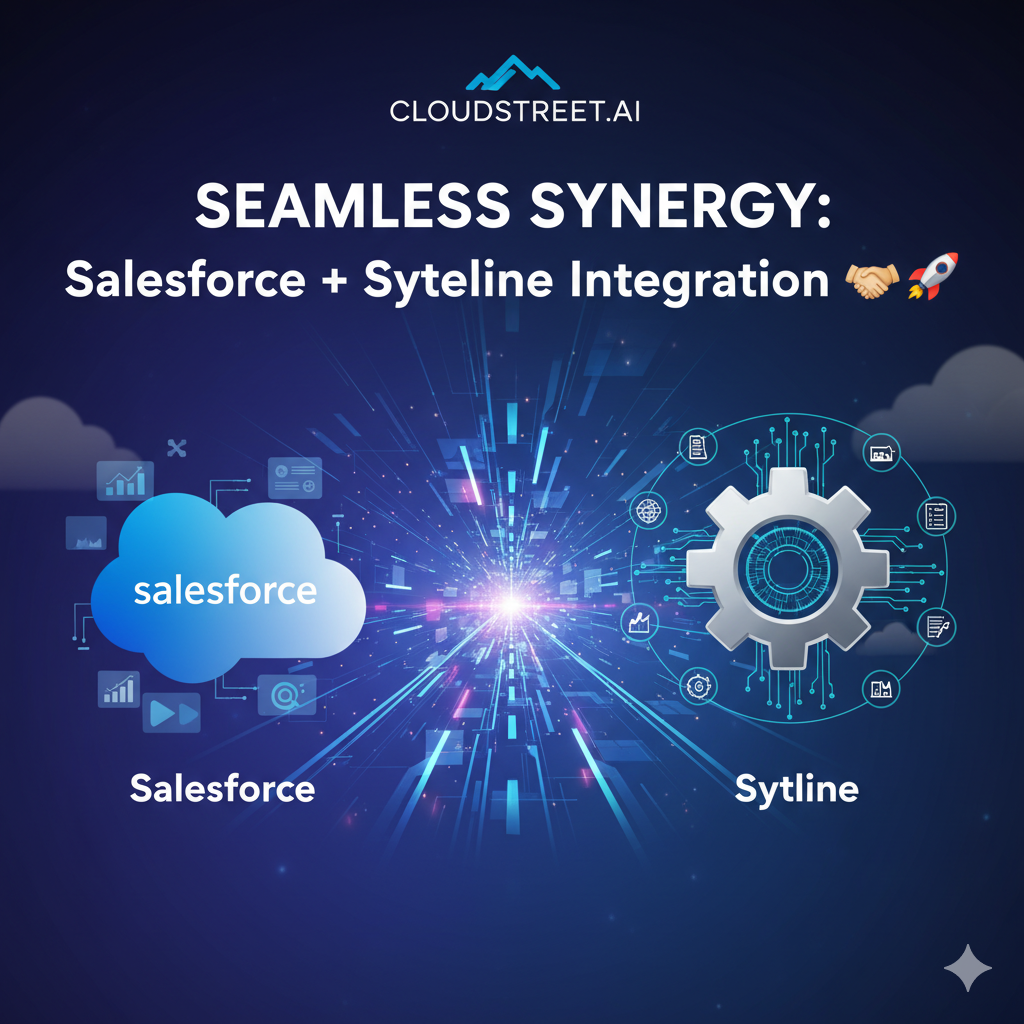
Manufacturing and industrial companies often struggle with disconnected systems that create data silos, manual processes, and missed opportunities. When your sales team uses Salesforce while your operations run on Syteline (now Infor CloudSuite Industrial), the lack of integration can cost you time, money, and customer satisfaction.
At CLOUDSTREET, we’ve helped Houston-based manufacturers and industrial companies: as well as global enterprises: bridge this gap through strategic system integration. The results speak for themselves: streamlined workflows, improved data accuracy, better sales and operations alignment, and measurable ROI improvements.
7 Key Benefits of Salesforce-Syteline Integration
1. Eliminate Manual Data Entry and Reduce Errors
The most immediate benefit is the elimination of duplicate data entry across systems. When customer information, orders, and pricing data automatically sync between Salesforce and Syteline, your teams spend less time on administrative tasks and more time on value-added activities. This automation also significantly reduces human errors that can lead to incorrect orders, pricing mistakes, and customer dissatisfaction.
2. Real-Time Data Synchronization Across Teams
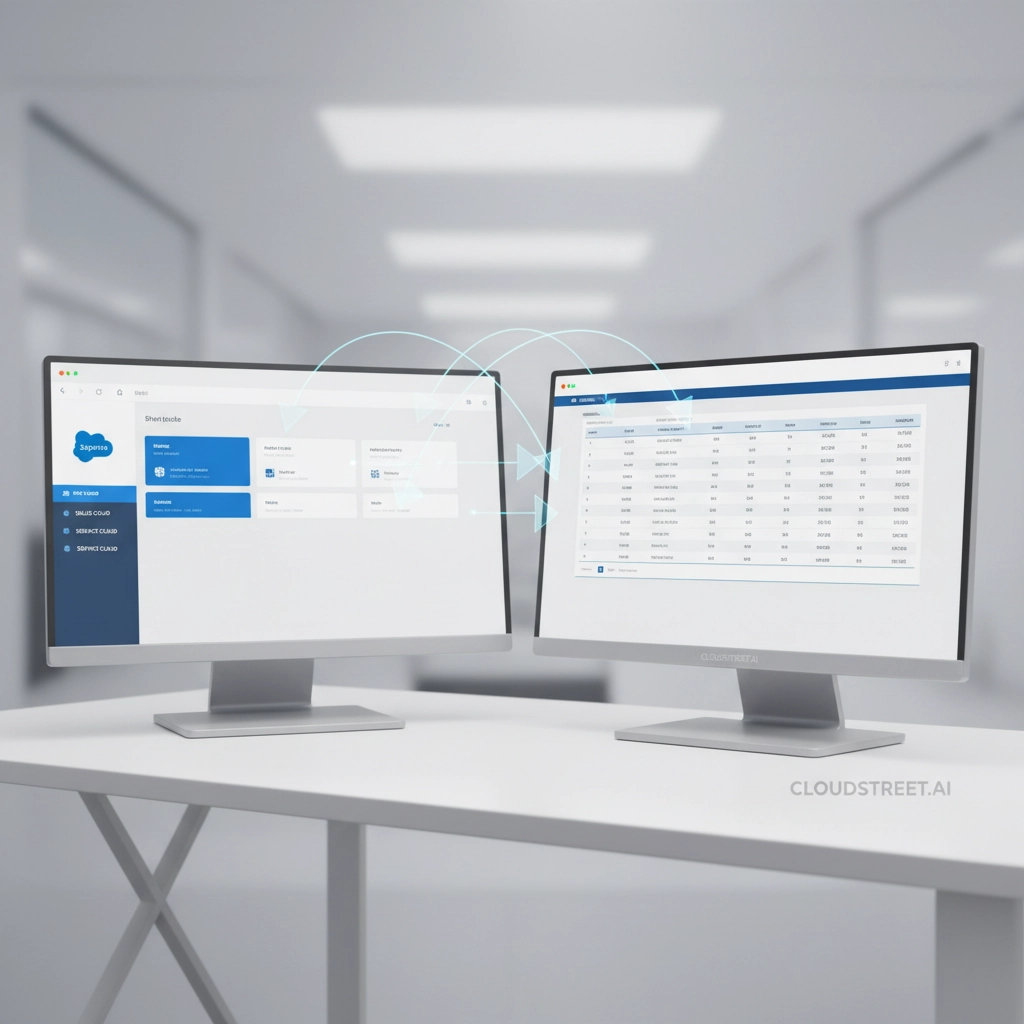
Integration creates a single source of truth for critical business information. Sales representatives can access real-time inventory levels, production schedules, and delivery dates directly within Salesforce, while operations teams can see customer preferences, sales forecasts, and service history from Syteline. This visibility enables faster decision-making and more accurate customer communications.
3. Improved Customer Experience and Satisfaction
Customers benefit from faster response times and more accurate information. When a customer calls asking about their order status, your sales team can provide real-time updates without switching between systems or waiting for information from operations. This level of service responsiveness builds trust and strengthens customer relationships.
4. Enhanced Sales Team Productivity
Sales representatives gain access to comprehensive customer profiles that include not just CRM data, but also purchase history, payment terms, credit limits, and production capacity from the ERP system. This complete view enables more informed sales conversations and better upselling opportunities.
5. Streamlined Quote-to-Cash Process
The integration accelerates the entire sales cycle by automatically pulling accurate pricing, product specifications, and availability data from Syteline into Salesforce. Quotes become more accurate, approvals happen faster, and orders flow seamlessly to production without manual handoffs.
6. Better Financial Visibility and Reporting
Combined data from both systems provides deeper insights into customer profitability, sales performance, and operational efficiency. Management can create comprehensive dashboards that show the complete picture of customer relationships and their impact on business operations.
7. Scalable Growth Without System Complexity
As your business grows, integrated systems scale together without creating additional complexity. New sales team members can be productive faster with access to complete customer information, while operations can handle increased volume without additional manual coordination.
8 Practical Use Cases for Manufacturing and Industrial Companies
1. Automated Order Processing from CRM to ERP
When a sales rep closes a deal in Salesforce, the order automatically appears in Syteline with all necessary details: customer information, product specifications, quantities, delivery dates, and special instructions. This eliminates the traditional handoff process and reduces order processing time from days to minutes.
2. Real-Time Inventory Visibility for Sales Teams
Sales representatives can view current inventory levels, work-in-progress orders, and projected availability dates while on customer calls. This capability prevents overselling, enables realistic delivery commitments, and identifies cross-selling opportunities for available products.
3. Unified Customer Service Experience
Customer service representatives have access to complete customer history including sales interactions, service requests, payment history, and current orders. This comprehensive view enables faster issue resolution and more personalized service delivery.
4. Production Planning Based on Sales Pipeline
Operations teams can access sales forecasts and pipeline data from Salesforce to better plan production schedules, material purchasing, and capacity allocation. This visibility helps optimize manufacturing efficiency and reduce inventory carrying costs.

5. Automated Pricing and Quote Generation
Current pricing from Syteline automatically updates in Salesforce, ensuring quotes always reflect accurate costs and margins. Special pricing agreements, volume discounts, and customer-specific terms sync automatically, reducing pricing errors and approval delays.
6. Integrated Quality and Compliance Tracking
Quality data from manufacturing processes can be linked to customer records in Salesforce, enabling proactive communication about certifications, compliance status, and quality metrics. This integration is particularly valuable for regulated industries.
7. Streamlined Returns and Warranty Management
Return authorizations initiated in Salesforce automatically create the necessary transactions in Syteline, including inventory adjustments, cost accounting updates, and replacement order generation. This coordination reduces processing time and improves customer satisfaction.
8. Enhanced Project Management for Custom Orders
For manufacturers handling custom or engineer-to-order products, integration enables project tracking across both systems. Sales teams can monitor project progress, communicate updates to customers, and coordinate changes without constant coordination with operations.
How CLOUDSTREET Delivers Integration Success
Based in Houston, Texas, CLOUDSTREET serves local manufacturers and industrial companies while also supporting global enterprises with their integration needs. Our hybrid approach to Salesforce consulting combines local project leadership with cost-effective nearshore development resources in Costa Rica.
Our integration methodology includes:
- Discovery and Assessment: We analyze your current systems, business processes, and integration requirements to design the optimal solution
- Custom Integration Development: Our team builds tailored connections between Salesforce and Syteline that match your specific business needs
- Testing and Quality Assurance: Comprehensive testing ensures data integrity and system reliability before going live
- Training and Change Management: We prepare your teams for the new integrated workflows and provide ongoing support
Ready to explore how Salesforce-Syteline integration can transform your business operations? Contact our team for a discovery session to assess your integration opportunities and potential ROI.
ROI and Business Impact
Companies implementing Salesforce-Syteline integration typically see measurable returns within 6-12 months. Common improvements include:
- 30-50% reduction in order processing time
- 25-40% decrease in data entry errors
- 20-30% improvement in customer response times
- 15-25% increase in sales team productivity
- Improved customer satisfaction scores and retention rates
The key to maximizing ROI is proper planning and execution. Our proven integration process ensures your project delivers measurable business value while minimizing disruption to ongoing operations.
Getting Started with Your Integration Project
Do You Have the Right License for API Access?
Before starting an integration, you must confirm that your Syteline (Infor CloudSuite Industrial) license allows for API access. This is a commercial entitlement, not just a technical setting, and is required for external systems like Salesforce to connect to your data.
The fastest way to verify this is to contact your Infor account representative. They can check your agreement and confirm if API access (sometimes called IDO or API Gateway access) is included or requires an add-on, as this can vary between on-premise and cloud versions.
Once licensing is confirmed, your Syteline administrator can enable the necessary “User Modules” for the integration account, which is the first step before any technical setup begins.
Every successful integration project begins with understanding your current state and defining your desired outcomes. Whether you’re looking to solve specific pain points or enable broader digital transformation, the right integration strategy can deliver significant competitive advantages.
Our team of certified Salesforce professionals and ERP integration specialists can help you navigate the technical and business challenges of connecting these critical systems. From initial assessment through go-live support, we provide the expertise and resources needed for integration success.
Schedule a discovery session with our Houston-based team to explore your integration opportunities. We’ll assess your current systems, understand your business requirements, and provide recommendations for achieving your operational goals.
Don’t let disconnected systems limit your growth potential. Contact CLOUDSTREET today to learn how Salesforce-Syteline integration can unlock new levels of efficiency and customer satisfaction for your manufacturing or industrial business.
Category
Discover insights that drive results - explore out latest blog posts now
DealHub Salesforce Integration for Manufacturers: Connecting CPQ, Contracts, and CRM
About the manufacturer: mid-market industrial equipment company A U.S.-based, mid-market [...]
Salesforce Data 360 and Agentforce: Why Grounding Is What Makes AI Agents Dependable
An AI agent can produce a fluent answer and still [...]
Salesforce Data 360 Governance and Informatica: Managing Data Quality, Access, and Trust in the Agentic Era
Data governance becomes more consequential when business data does more [...]