Turning Unstructured Data Into Structured Gold: How AI Empowers Manufacturers and Distributors
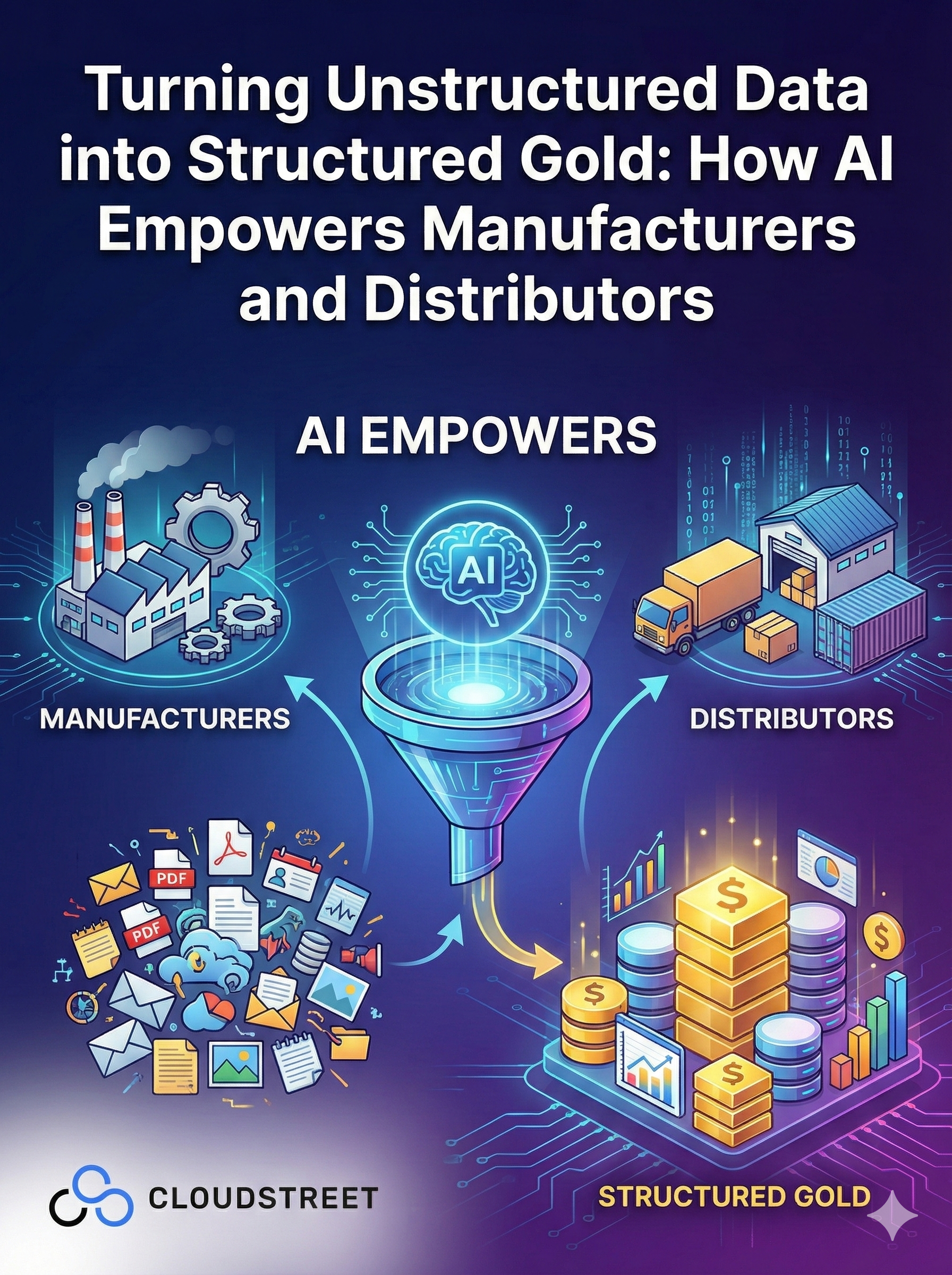
Every day, manufacturing plants and distribution centers generate massive amounts of data that never sees the light of day. Maintenance logs written on scraps of paper, invoice PDFs scattered across email inboxes, sensor readings that flood in every second, and customer complaint emails that pile up in support queues. This unstructured data represents untapped potential worth millions in operational improvements, cost savings, and competitive advantages.
The game-changer? AI tools that can automatically transform this messy, unstructured information into clean, organized datasets that power intelligent automation and decision-making. Here at CLOUDSTREET in Houston, Texas, we’ve helped manufacturers and distributors across the globe unlock this hidden value through strategic AI implementation.
Ready to turn your data chaos into competitive advantage? Contact our Houston-based team today to discuss your AI transformation strategy.
What Makes Data “Unstructured” and Why It Matters
Unstructured data doesn’t fit neatly into traditional spreadsheets or databases. In manufacturing and distribution, this includes:
- Equipment maintenance logs written in technicians’ own words
- Invoice PDFs from hundreds of different suppliers with varying formats
- Product photos and specification sheets sent via email
- Sensor data streams that capture temperature, pressure, vibration readings
- Customer service emails describing product issues or delivery problems
- Handwritten inspection reports and quality control notes

While this data contains incredibly valuable insights, it’s historically been nearly impossible to analyze at scale. A human might spend hours manually extracting key information from a single batch of invoices, but AI can process thousands in minutes while maintaining accuracy and consistency.
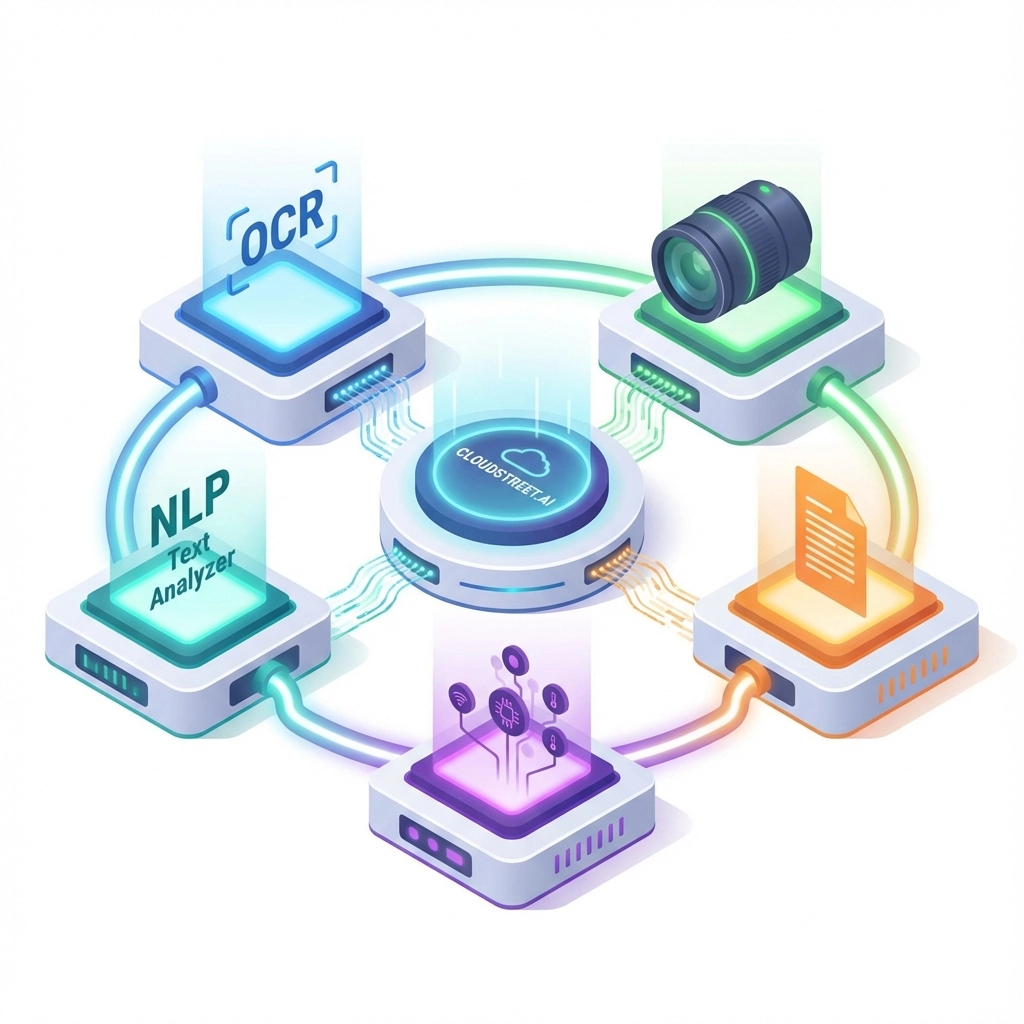
5 Core AI Technologies That Structure Your Data
1. Optical Character Recognition (OCR) + Natural Language Processing
Modern OCR tools like AWS Textract and Google Document AI can extract text from scanned invoices, purchase orders, and shipping documents. When combined with NLP, they understand context: distinguishing between item descriptions, quantities, and prices even when formats vary wildly between suppliers.
Real-world example: A Houston-based oil equipment distributor processes 500+ vendor invoices daily. Using AWS Textract with custom NLP models, they automatically extract part numbers, quantities, and pricing data directly into their ERP system, reducing manual data entry from 8 hours to 30 minutes per day.
2. Computer Vision for Image Analysis
AI-powered image recognition transforms product photos, equipment inspections, and quality control images into structured data points. Salesforce Einstein Vision and Microsoft Azure Computer Vision can identify defects, classify products, and extract specifications from visual content.
Ready to automate your visual inspection processes? Our Salesforce services team specializes in Einstein Vision implementations.
3. Intelligent Document Processing (IDP)
Tools like UiPath Document Understanding and Automation Anywhere IQ Bot combine multiple AI techniques to extract data from complex documents like contracts, technical specifications, and compliance reports. These platforms learn document patterns and improve accuracy over time.
4. IoT Data Stream Processing
Manufacturing sensors generate continuous streams of unstructured time-series data. AWS IoT Analytics and Google Cloud IoT Core can structure this information in real-time, identifying patterns that predict equipment failures or quality issues before they impact production.
5. Conversational AI for Text Mining
Salesforce Einstein NLP and OpenAI’s GPT models excel at extracting structured insights from customer emails, support tickets, and feedback forms. They can automatically categorize issues, extract product references, and identify sentiment trends.
Real-World Applications That Drive ROI
Manufacturing Equipment Maintenance
Challenge: A automotive parts manufacturer had technicians writing maintenance notes in free-form text. Critical patterns were buried in thousands of unstructured reports.
Solution: Implemented Salesforce Data Cloud with custom NLP models to extract equipment IDs, failure modes, repair actions, and timestamps from maintenance logs.
Result: Predictive maintenance accuracy improved 40%, reducing unplanned downtime by $2M annually.
Invoice and Purchase Order Automation
Challenge: A chemical distributor received invoices in 50+ different formats from suppliers worldwide. Manual processing created 3-day delays in accounts payable.
Solution: Deployed UiPath AI Fabric with custom document extraction models trained on their supplier formats.
Result: Invoice processing time dropped from 3 days to 4 hours, improving cash flow and supplier relationships.
Want to streamline your document workflows? Schedule a consultation with our automation experts.
Customer Service Intelligence
Challenge: A industrial equipment manufacturer received 200+ customer emails daily but couldn’t identify recurring issues or parts demand patterns.
Solution: Used Salesforce Einstein NLP to automatically categorize emails, extract part numbers, and identify escalation triggers.
Result: Response times improved 60%, and proactive maintenance recommendations increased customer satisfaction by 35%.

How Salesforce AI Transforms Business Data
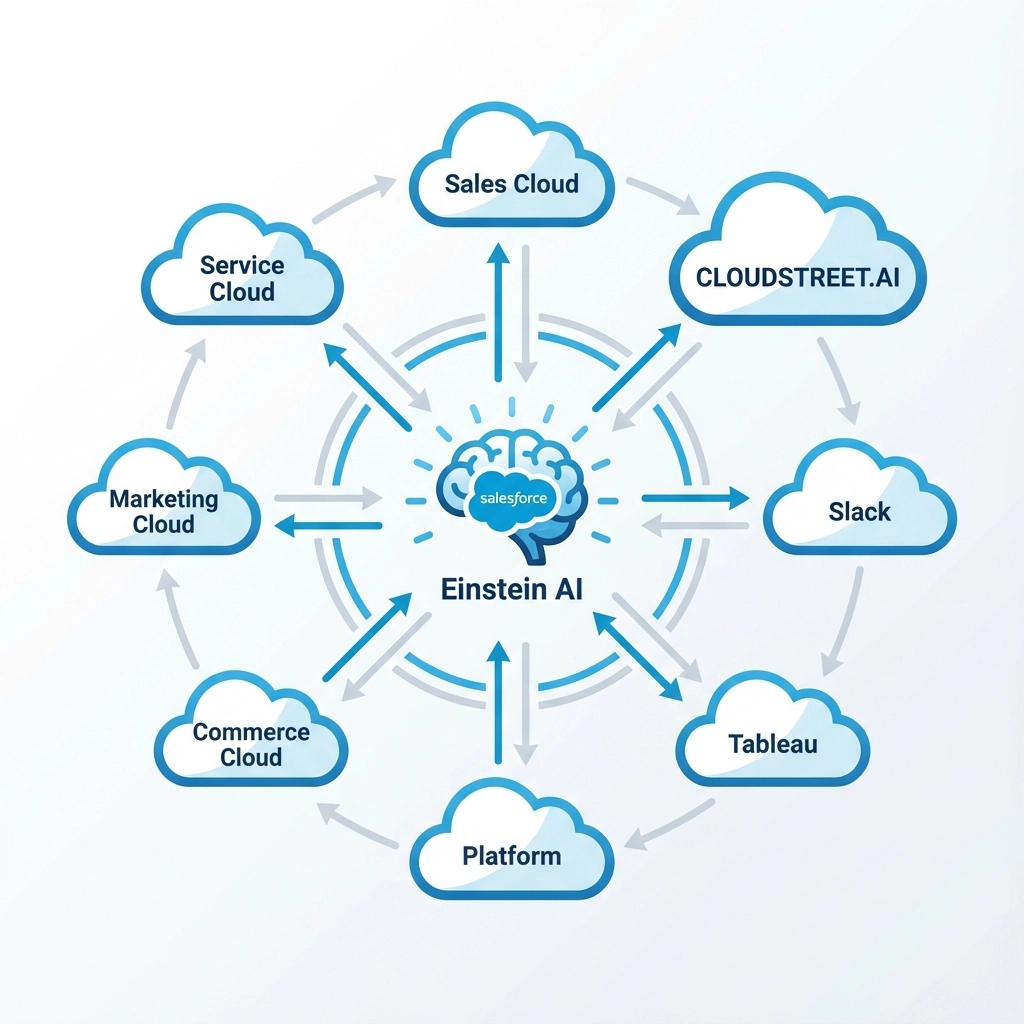
Salesforce offers several AI-powered tools specifically designed for structuring business data:
Einstein Analytics and Data Cloud
Salesforce Data Cloud ingests unstructured data from multiple sources: emails, documents, IoT sensors: and applies AI to create unified customer and operational views. Einstein Analytics then surfaces insights through automated dashboards and predictive models.
Einstein NLP and Sentiment Analysis
Built into Sales Cloud and Service Cloud, Einstein NLP automatically extracts structured information from customer communications, including:
- Product names and model numbers mentioned in emails
- Issue categories and priority levels
- Sentiment trends across customer interactions
- Buying signals hidden in unstructured text
Einstein Vision for Visual Data
Einstein Vision transforms product images, equipment photos, and inspection documentation into structured data points that integrate seamlessly with your CRM and ERP systems.
Interested in seeing how Einstein AI can structure your business data? Our Houston team offers personalized Salesforce AI demonstrations.
4 Steps to Get Started With AI-Powered Data Structuring
Step 1: Identify Your Highest-Value Unstructured Data
Start with data sources that directly impact revenue or costs. Common priorities include:
- Invoice and purchase order processing
- Customer service communications
- Equipment maintenance logs
- Quality inspection reports
Step 2: Choose the Right AI Tools for Your Use Case
- For document processing: AWS Textract, Google Document AI, or UiPath
- For customer communications: Salesforce Einstein NLP or OpenAI APIs
- For images and visual inspection: Einstein Vision or Azure Computer Vision
- For IoT sensor data: AWS IoT Analytics or Google Cloud IoT
Step 3: Start Small and Scale Gradually
Begin with a pilot project processing 100-500 documents or data points. Measure accuracy, time savings, and business impact before expanding to larger datasets.
Step 4: Integrate with Existing Systems
Ensure your AI tools can automatically feed structured data into your ERP, CRM, or business intelligence platforms. This creates seamless workflows and maximizes ROI.
The Agentic AI Advantage
Once your data is properly structured, it becomes the foundation for agentic AI: autonomous systems that can take actions based on data insights. Structured data enables:
- Automated reordering when inventory data shows low stock levels
- Predictive maintenance scheduling based on structured equipment sensor data
- Dynamic pricing adjustments using structured competitor and demand data
- Quality control alerts triggered by structured inspection data patterns
Ready to implement agentic AI workflows in your organization? Connect with our Houston-based AI specialists for a strategic consultation.
Measuring Success: What to Expect
Organizations typically see these improvements within 3-6 months:
- 70-90% reduction in manual data entry time
- 40-60% faster document processing workflows
- 25-40% improvement in predictive model accuracy
- 15-30% reduction in operational costs through better insights

Your Next Steps
The companies winning in today’s competitive manufacturing and distribution landscape aren’t just collecting more data: they’re turning unstructured information into structured intelligence that powers smarter decisions and automated workflows.
From our Houston headquarters, CLOUDSTREET has helped manufacturers and distributors worldwide transform their data operations using AI. Whether you’re drowning in invoices, struggling with maintenance logs, or missing insights buried in customer communications, the right AI strategy can unlock significant value.
Don’t let valuable data stay trapped in unstructured formats. Contact CLOUDSTREET today to start your AI-powered data transformation journey.
The question isn’t whether AI will reshape how you handle data: it’s whether you’ll lead the transformation or be left behind by competitors who acted first.
Category
Discover insights that drive results - explore out latest blog posts now
Case Study: How Highland Cabinetry Colorado Built a Modern Wholesale Powerhouse on Salesforce B2B Commerce Cloud
In the world of high-end cabinetry, timing is everything. When [...]
Agentforce ROI: 7 Ways to Maximize Your Salesforce AI Investment
You've heard the buzz. Salesforce Agentforce is supposed to revolutionize [...]

Salesforce B2B Commerce Cloud Partner & Consultant Guide
You're about to drop serious money on a Salesforce B2B [...]