The Perfect Pair: Salesforce OMS + Experience Cloud Portals
You’ve spent months (and a healthy chunk of your budget) perfecting your B2B e-commerce storefront. The product pages look sharp, the "Add to Cart" button is in the perfect spot, and your checkout flow is as smooth as silk. But what happens the moment your customer clicks "Place Order"?
For a lot of businesses, that’s where the magic ends and the "Where is my order?" phone calls begin.
If your post-purchase experience feels like a black hole, you aren’t alone. In the B2B world, customers don't just want to buy things; they want to manage their relationship with you. They need to know where their pallets are, how to return a damaged shipment without calling a rep, and how to view their entire order history at 2:00 AM.
This is where the powerhouse combination of Salesforce Order Management (OMS) and Salesforce Experience Cloud comes into play. At CLOUDSTREET, we’ve seen firsthand how this pairing transforms chaotic back-office processes into a sleek, professional customer interface. Based in Houston, Texas, we help companies locally and across the globe bridge this gap.
In this deep dive, we’ll look at 7 reasons why this duo is the ultimate solution for your B2B operations.
1. The "Single Source of Truth" Is No Longer a Myth
The biggest headache in B2B commerce is data fragmentation. Your ERP says one thing, your commerce site says another, and your warehouse management system is living in its own reality.
Salesforce OMS acts as the brain of your post-purchase operations. It gathers data from every corner of your business. When you pair this with Experience Cloud, you are essentially taking that brain and giving it a face.
Instead of building a custom portal that requires complex API calls every time a customer wants to see their order status, Experience Cloud sits directly on top of the Salesforce platform. This means the order data in OMS is the exact same data the customer sees in the portal. No lag, no sync errors, and no "alternative facts."

2. 6 Ways OMS + Experience Cloud Powers Self-Service
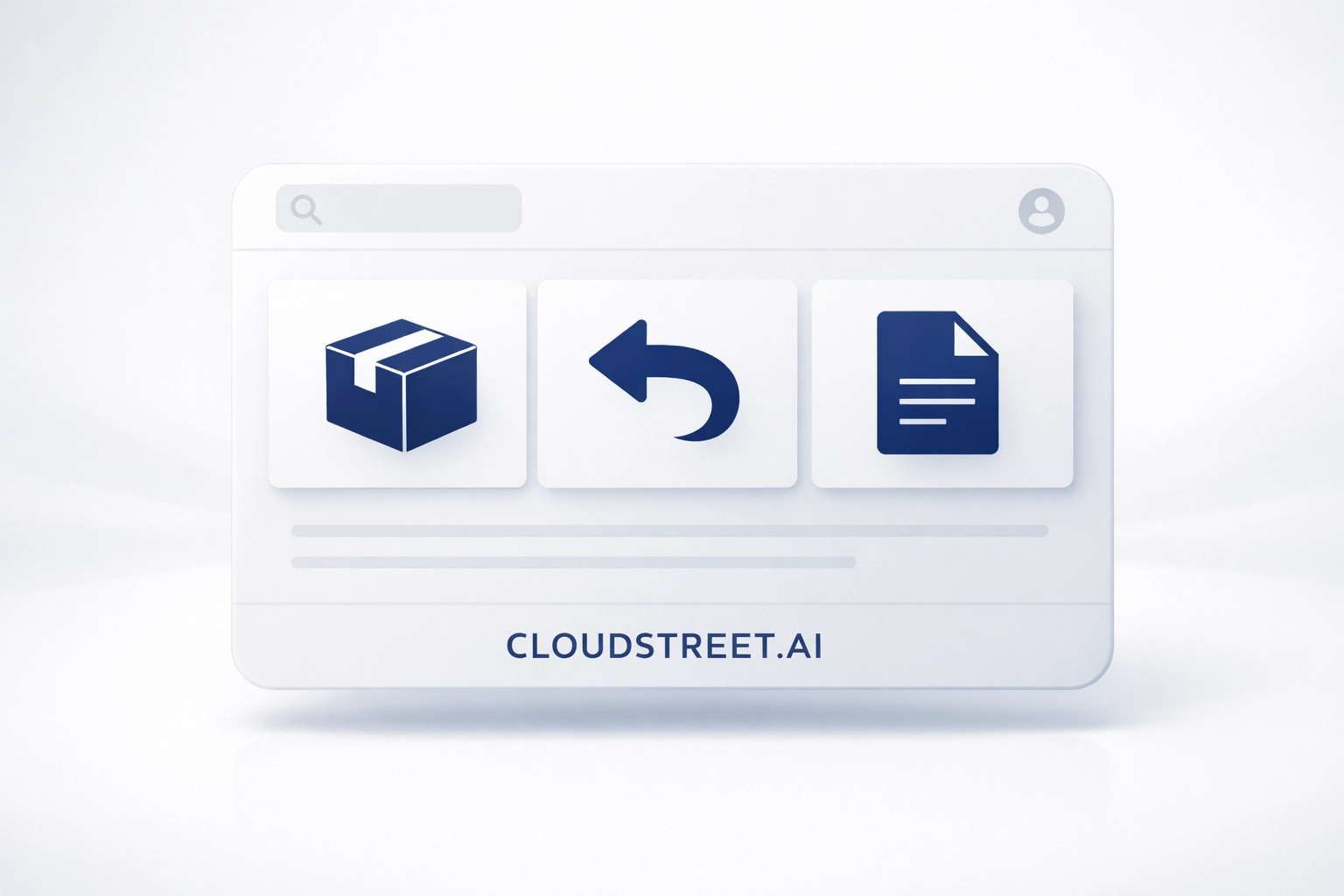
B2B customers are increasingly demanding the "Amazon experience." They want to do things themselves. By using Experience Cloud to build your portal, you can surface these 6 critical OMS functions directly to your customers:
- Real-Time Order Tracking: Give customers a granular view of where their items are in the fulfillment cycle (e.g., "Picked," "Packed," "Shipped").
- Self-Service Returns (RMA): Let customers initiate a return, print a label, and select a reason code without ever talking to a support agent.
- Order Modifications: Within a certain window, allow customers to change shipping addresses or cancel line items.
- Invoice and Payment History: B2B buyers often need to download invoices for their accounting departments. Experience Cloud makes this a one-click process.
- Multi-Warehouse Visibility: If an order is split across three shipments, OMS tracks them all, and Experience Cloud shows them all in a single, clean view.
- Subscription Management: If you offer recurring orders, customers can pause, skip, or increase their quantities directly in the portal.
Pro Tip: Looking for more ways to leverage a portal? Check out our article on 5 powerful Salesforce Experience Cloud use cases for B2B customer portals beyond purchasing.
3. Distributed Order Management (DOM) Meets the Frontend
OMS doesn't just record orders; it routes them. Salesforce OMS uses "Distributed Order Management" to decide the most efficient way to fulfill an order, whether that’s from Warehouse A, Warehouse B, or a retail store.
When you connect this to an Experience Cloud portal, the customer gets total transparency. If an item is coming from a different location and will arrive two days later, the portal tells them that upfront. This transparency builds trust, which is the currency of B2B relationships.
4. Why CLOUDSTREET Recommends Experience Cloud Over Custom Builds
We get asked all the time: "Can’t we just build a portal on our existing website?"
Technically, yes. But here is why we (and our global client base) recommend Experience Cloud:
- Security: Salesforce spends billions on security. Your customer data and order history are protected by the same infrastructure that protects the world’s largest banks.
- Speed to Market: Experience Cloud comes with pre-built components designed specifically for Commerce and OMS. We can launch a functional, beautiful portal in a fraction of the time it takes to code one from scratch.
- Mobile-First: These portals are responsive out of the box. Your customers can check their orders from a tablet on a construction site or a phone in a warehouse.
At CLOUDSTREET, we are specialists in Experience Cloud implementation. We don't just "turn it on"; we tailor the user journey to match your specific B2B workflows. Whether you're in Houston or halfway around the world, our goal is to make your portal your most valuable employee.
5. Transforming Operations: The LaMotte Success Story
To see this in action, you don't have to look far. We recently worked with LaMotte to modernize their digital presence. They needed to move from legacy processes to a streamlined Salesforce ecosystem.
By implementing a robust commerce and order management strategy, they weren't just selling more: they were operating better. You can read the full breakdown of how we handled it in our case study: Launching LaMotte’s First E-Commerce Store and Transforming Operations with Salesforce.

6. Reducing the Burden on Your Service Team
Every time a customer logs into an Experience Cloud portal to check an order status, that’s one less phone call to your support team.
Salesforce OMS integrates natively with Service Cloud. This means if a customer does need to call in, your agent sees the exact same portal view the customer is looking at. They can see that the customer tried to initiate a return and can jump in to help immediately. This "joined-up" thinking is what separates market leaders from everyone else.
Are you ready to stop losing time to manual order lookups?[Contact CLOUDSTREET today to see how we can build your OMS-powered portal.]
7. Scaling for the Future (Local to Global)
One of the best things about the OMS + Experience Cloud combo is that it grows with you. If you decide to expand into new regions, Experience Cloud handles multi-language and multi-currency support with ease. Meanwhile, OMS can scale to handle millions of orders without breaking a sweat.
From our headquarters here in Houston, Texas, we’ve helped companies navigate the complexities of global trade using these exact tools. We understand that a B2B portal isn't just a "nice to have": it's a critical piece of infrastructure for any business that wants to scale.

5 Steps to Get Started with Your OMS Portal
If you’re ready to take the plunge, here is how we typically recommend starting:
- Audit Your Data: Ensure your product and inventory data is clean. OMS is only as good as the info you feed it.
- Map the Journey: What are the top 3 things your customers call about? Make those the most prominent features in your Experience Cloud portal.
- Choose Your Template: Use the Salesforce "Customer Service" or "Build Your Own" templates in Experience Cloud to get a head start.
- Build the Integration: Connect OMS to your ERP and shipping carriers.
- Pilot and Launch: Start with a small group of trusted customers, gather feedback, and then roll it out to the world.
Conclusion
The post-purchase experience is the new frontier of B2B competition. By pairing the back-office intelligence of Salesforce OMS with the front-end flexibility of Experience Cloud, you give your customers the transparency they crave and your team the efficiency they need.
At CLOUDSTREET, we pride ourselves on being the bridge between these powerful technologies and your business goals. We are experts in crafting these experiences and would love to help you build something your customers will love.
Ready to transform your order management?
Reach out to our Houston-based team of Salesforce specialists today!
Category
Discover insights that drive results - explore out latest blog posts now
The Perfect Pair: Salesforce OMS + Experience Cloud Portals
You’ve spent months (and a healthy chunk of your budget) [...]
Post-Purchase Perfection: A Deep Dive into Salesforce Order Management (OMS)
Let’s be honest: the "Buy" button is just the beginning. [...]
The Product-to-Cash Powerhouse: A Deep Dive into Salesforce Revenue Lifecycle Management (RLM)
If you’ve been in the Salesforce ecosystem for a while, [...]