Salesforce Moves Into IT Asset Management: What It Means for Business
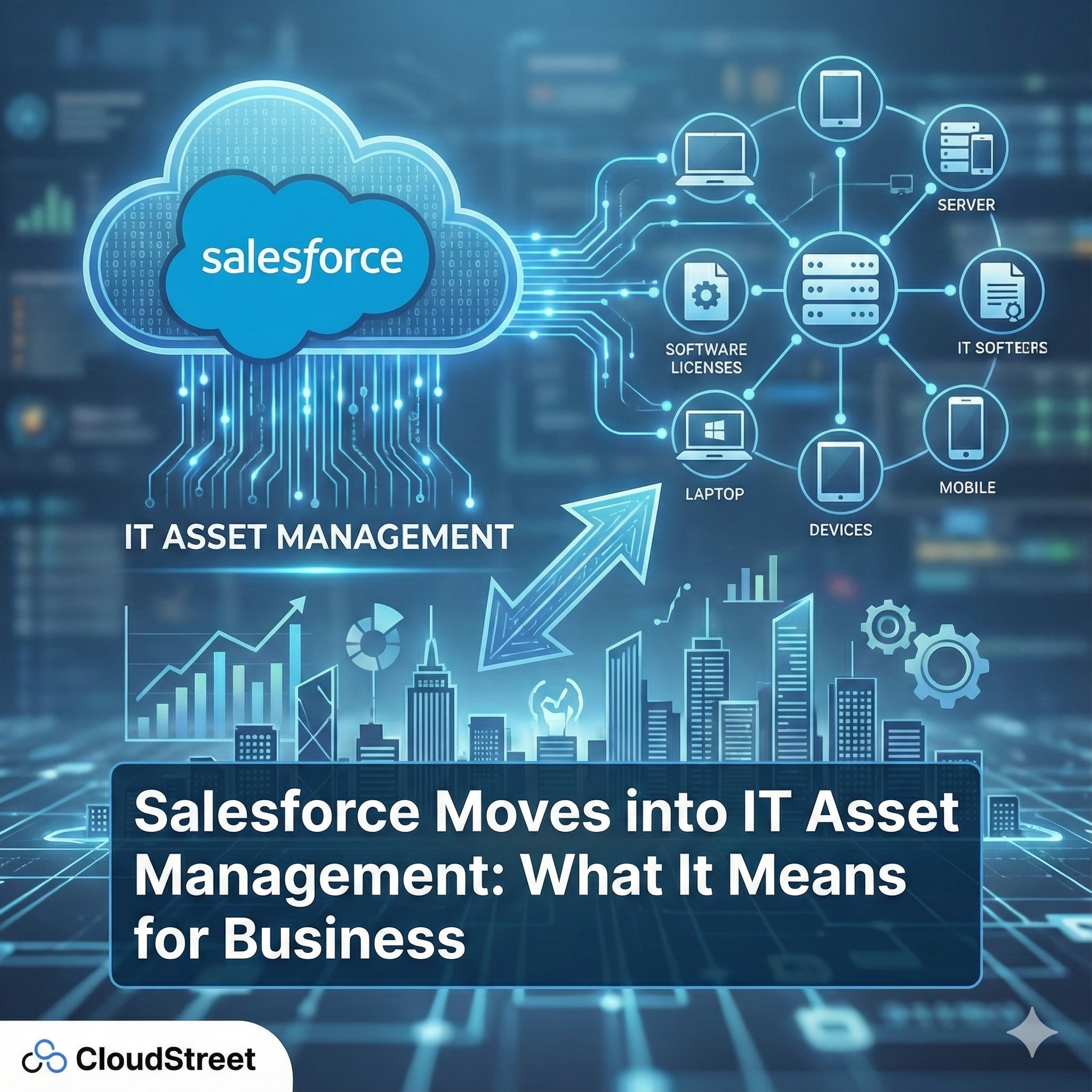
Salesforce is making waves in the IT Asset Management (ITAM) space, and it’s about time businesses paid attention. With their recent moves in 2024 and 2025, including the Connected Assets suite for Manufacturing Cloud and enhanced Field Service innovations, Salesforce is positioning itself as a serious player in enterprise asset management. This isn’t just another product launch: it’s a fundamental shift in how organizations can manage their assets, from manufacturing equipment to IT infrastructure.
What’s Driving Salesforce’s ITAM Push?
The lines between IT Service Management (ITSM) and customer experience are blurring faster than ever. Salesforce recognized that modern businesses need more than just asset tracking: they need intelligent, AI-powered systems that can predict problems before they happen and streamline operations across the entire organization.
At CLOUDSTREET, we’ve been watching this evolution closely from our Houston headquarters, and we’re seeing demand from both local Texas businesses and our global clients who want to leverage Salesforce’s expanding capabilities. The convergence of asset management with CRM and service delivery is creating unprecedented opportunities for operational efficiency.

The 5 Core Components of Salesforce’s ITAM Strategy
Salesforce’s approach to IT Asset Management isn’t just about tracking equipment: it’s about creating an intelligent ecosystem that transforms how businesses operate. Here are the five key elements driving their ITAM expansion:
1. Connected Assets Suite for Manufacturing Cloud
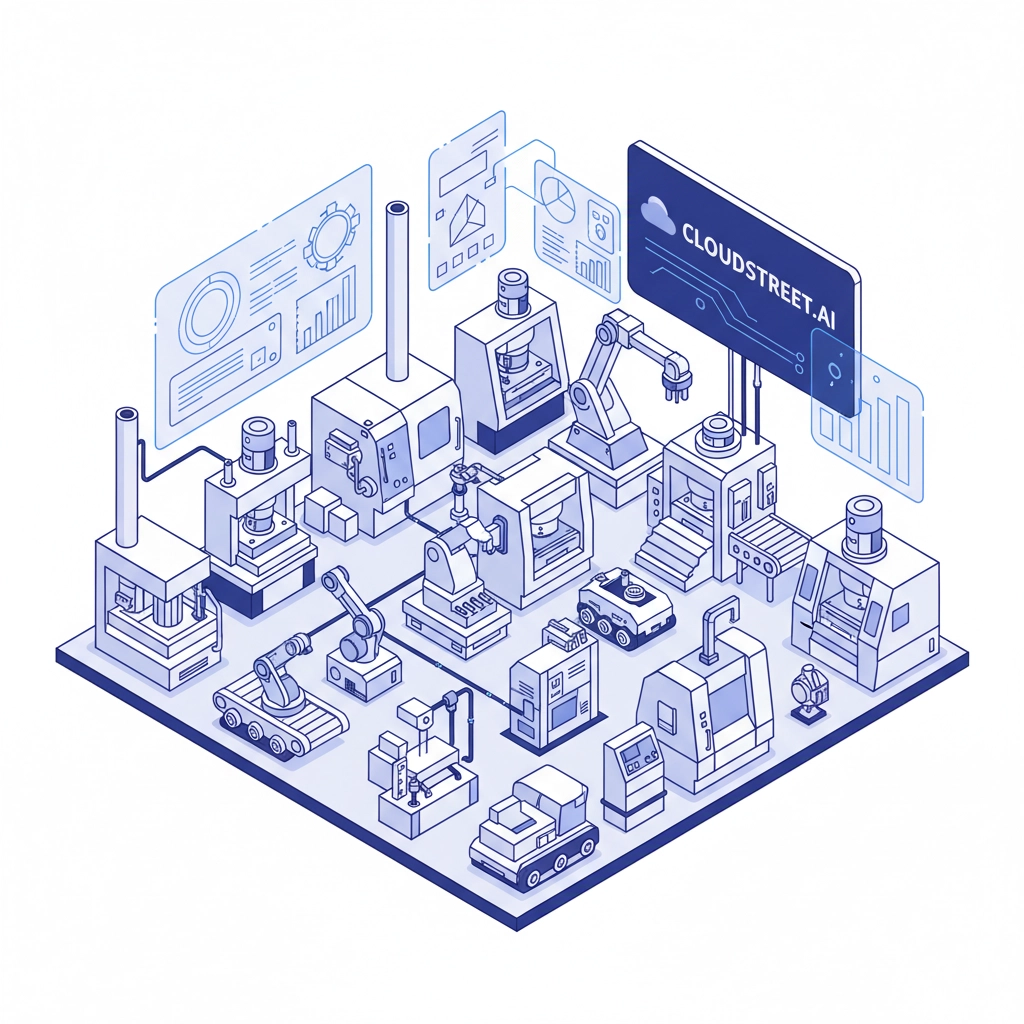
The Connected Assets suite represents Salesforce’s most significant leap into industrial asset management. This isn’t your typical inventory tracking system. It’s designed specifically for manufacturers who need to monitor complex equipment across multiple locations, integrate with IoT sensors, and maintain detailed service histories.
The suite allows manufacturers to create digital twins of their physical assets, tracking everything from installation dates to performance metrics. This unified approach means a manufacturer in Houston can monitor equipment in their Dallas facility while planning maintenance schedules based on real-time data.
2. AI-Powered Predictive Maintenance
Here’s where Salesforce really differentiates itself from traditional ITAM solutions. Their Einstein AI platform analyzes asset performance patterns to predict when maintenance will be needed: often weeks or months in advance. This isn’t just helpful; it’s transformational for businesses that rely on critical equipment.
Instead of reactive maintenance that leads to costly downtime, organizations can now schedule service during optimal windows. The AI learns from historical data, environmental factors, and usage patterns to provide increasingly accurate predictions over time.
3. Real-Time Monitoring and Telematics
Salesforce has invested heavily in real-time asset monitoring capabilities. Through integration with IoT devices and telematics systems, businesses can track asset location, performance, and condition continuously. This is particularly powerful for field service organizations managing mobile assets or equipment deployed across geographic regions.
The real-time data flows directly into Salesforce dashboards, giving managers immediate visibility into asset status without switching between multiple systems. For a company like ours serving clients globally, this unified view is invaluable.
4. Mobile Workforce Empowerment
Salesforce’s mobile-first approach ensures that field technicians and service teams can access asset information, update maintenance records, and capture data from anywhere. The mobile platform includes features like barcode scanning, photo documentation, and offline capability for remote locations.
This mobile empowerment extends beyond just viewing data: technicians can trigger work orders, access service manuals, and communicate with specialists directly through the platform. It’s about making the entire workforce more efficient and informed.
5. Unified Asset Data Architecture
Perhaps most importantly, Salesforce is creating a single source of truth for all asset data. This unified architecture connects asset information with customer records, service histories, warranty data, and financial information. The result is a complete picture of asset lifecycle management that supports better decision-making across the organization.
The ITSM and Customer Experience Convergence
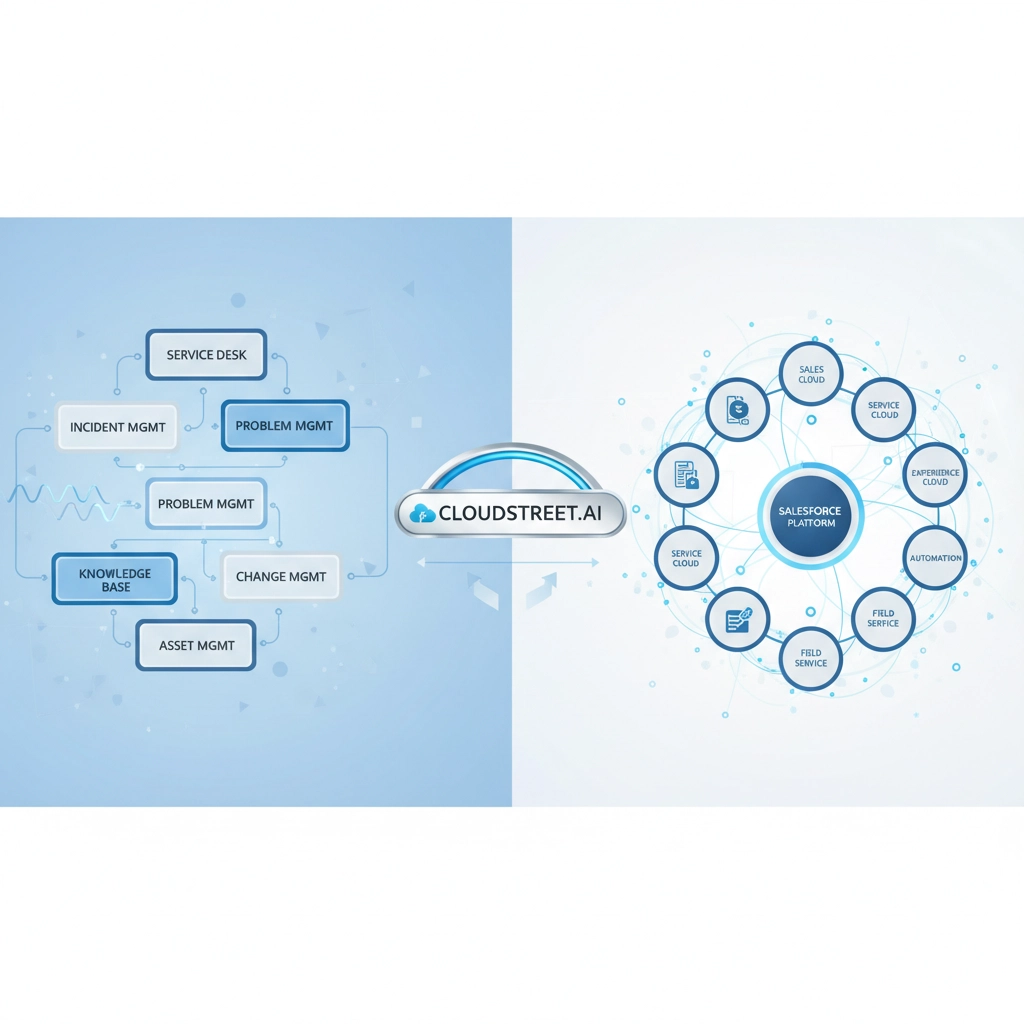
One of the most significant trends we’re seeing is the convergence of IT Service Management with customer experience platforms. Salesforce’s Agentforce IT Service, launched recently, exemplifies this trend by bringing together IT operations, employee support, and customer service on a single platform.
This convergence matters because assets don’t exist in isolation: they support business processes that ultimately impact customers. When a manufacturing asset fails, it might delay product delivery to customers. When IT assets underperform, it affects employee productivity and customer service quality.
Salesforce’s approach recognizes these interconnections. Their ITAM solutions integrate seamlessly with Service Cloud, Sales Cloud, and other platform components, ensuring that asset-related issues are visible across the entire organization.

What This Means for Manufacturers and Large Enterprises
For manufacturers, Salesforce’s ITAM expansion offers 4 key advantages that traditional solutions struggle to match:
1. End-to-End Visibility: From raw materials to finished products, manufacturers can track assets throughout the entire production lifecycle. This includes supplier equipment, production machinery, and customer-deployed products.
2. Customer-Centric Asset Management: Unlike traditional ITAM tools that focus solely on internal operations, Salesforce connects asset data with customer relationships. This means better warranty management, proactive customer service, and opportunities for additional sales.
3. Scalable Global Operations: Large enterprises with international operations benefit from Salesforce’s cloud-native architecture. Asset data synchronizes across regions, compliance requirements are managed centrally, and global teams have consistent access to information.
4. Integration with Existing Investments: Most large organizations already use Salesforce for CRM or other functions. Expanding into ITAM leverages existing investments and reduces the complexity of managing multiple vendor relationships.
Salesforce vs. ServiceNow: The New Competitive Landscape
ServiceNow has dominated the ITSM and ITAM space for years, but Salesforce’s entry is reshaping the competitive landscape. Here’s how they stack up:
Salesforce Advantages:
- Massive existing customer base (60,000+ Service Cloud customers)
- Unified platform reducing integration complexity
- AI-first approach with Einstein capabilities
- Strong mobile and customer experience focus
ServiceNow’s Strengths:
- Mature ITSM workflows and established best practices
- Deep IT operations expertise
- Extensive third-party integrations
- Strong enterprise IT focus
The reality is that many organizations will benefit from Salesforce’s integrated approach, especially those already invested in the Salesforce ecosystem. The decision often comes down to whether you want best-of-breed ITSM tools or a unified platform that connects asset management with broader business processes.
Implementation Considerations for Your Organization
If you’re considering Salesforce’s ITAM capabilities, here are 6 critical factors to evaluate:
1. Current Salesforce Investment: Organizations already using Salesforce platforms will find easier implementation paths and better ROI from ITAM expansion.
2. Asset Complexity: Simple asset tracking might not justify Salesforce’s sophisticated capabilities, but complex, interconnected assets benefit significantly from the integrated approach.
3. Customer Integration Requirements: If your assets directly impact customer experience, Salesforce’s unified platform provides advantages that standalone ITAM tools can’t match.
4. Mobile Workforce Needs: Organizations with significant field service operations will benefit from Salesforce’s mobile-first architecture and real-time capabilities.
5. AI and Predictive Maintenance Readiness: To leverage Salesforce’s AI capabilities effectively, organizations need quality historical data and clear maintenance processes.
6. Global Scale Requirements: Multi-national organizations benefit from Salesforce’s cloud infrastructure and global compliance capabilities.
The CLOUDSTREET Advantage in Salesforce ITAM
At CLOUDSTREET, we’ve been helping organizations maximize their Salesforce investments for years. Our experience with B2B Commerce Cloud implementations gives us unique insights into how asset management integrates with broader business processes.
We understand that implementing ITAM isn’t just about technology: it’s about transforming how your organization operates. From our Houston base, we’ve helped companies across Texas and around the world navigate complex Salesforce implementations, and we’re ready to help you leverage these new ITAM capabilities.
Our approach focuses on practical, business-driven implementations that deliver measurable results. We don’t just configure software; we help you redesign processes, train teams, and measure success.
Looking Ahead: The Future of Asset Management
Salesforce’s move into ITAM represents more than just market expansion: it signals a fundamental shift toward intelligent, integrated asset management. As IoT devices become more prevalent and AI capabilities continue advancing, the organizations that adopt these integrated approaches now will have significant competitive advantages.
The future of asset management isn’t about tracking what you own; it’s about optimizing how those assets support your business objectives and customer relationships. Salesforce’s platform approach provides the foundation for this evolution.

Ready to explore how Salesforce’s ITAM capabilities can transform your organization? At CLOUDSTREET, we’re here to help you navigate this exciting opportunity. Whether you’re in Houston, across Texas, or anywhere in the world, our team can assess your needs and design an implementation strategy that delivers real business value.
Contact us today to discuss how Salesforce’s asset management evolution can drive efficiency, reduce costs, and improve customer satisfaction for your organization. The future of intelligent asset management is here: let’s make sure you’re ready to capitalize on it.
Category
Discover insights that drive results - explore out latest blog posts now
Case Study: How Highland Cabinetry Colorado Built a Modern Wholesale Powerhouse on Salesforce B2B Commerce Cloud
In the world of high-end cabinetry, timing is everything. When [...]
Agentforce ROI: 7 Ways to Maximize Your Salesforce AI Investment
You've heard the buzz. Salesforce Agentforce is supposed to revolutionize [...]
Salesforce B2B Commerce Cloud Partner & Consultant Guide
You're about to drop serious money on a Salesforce B2B [...]