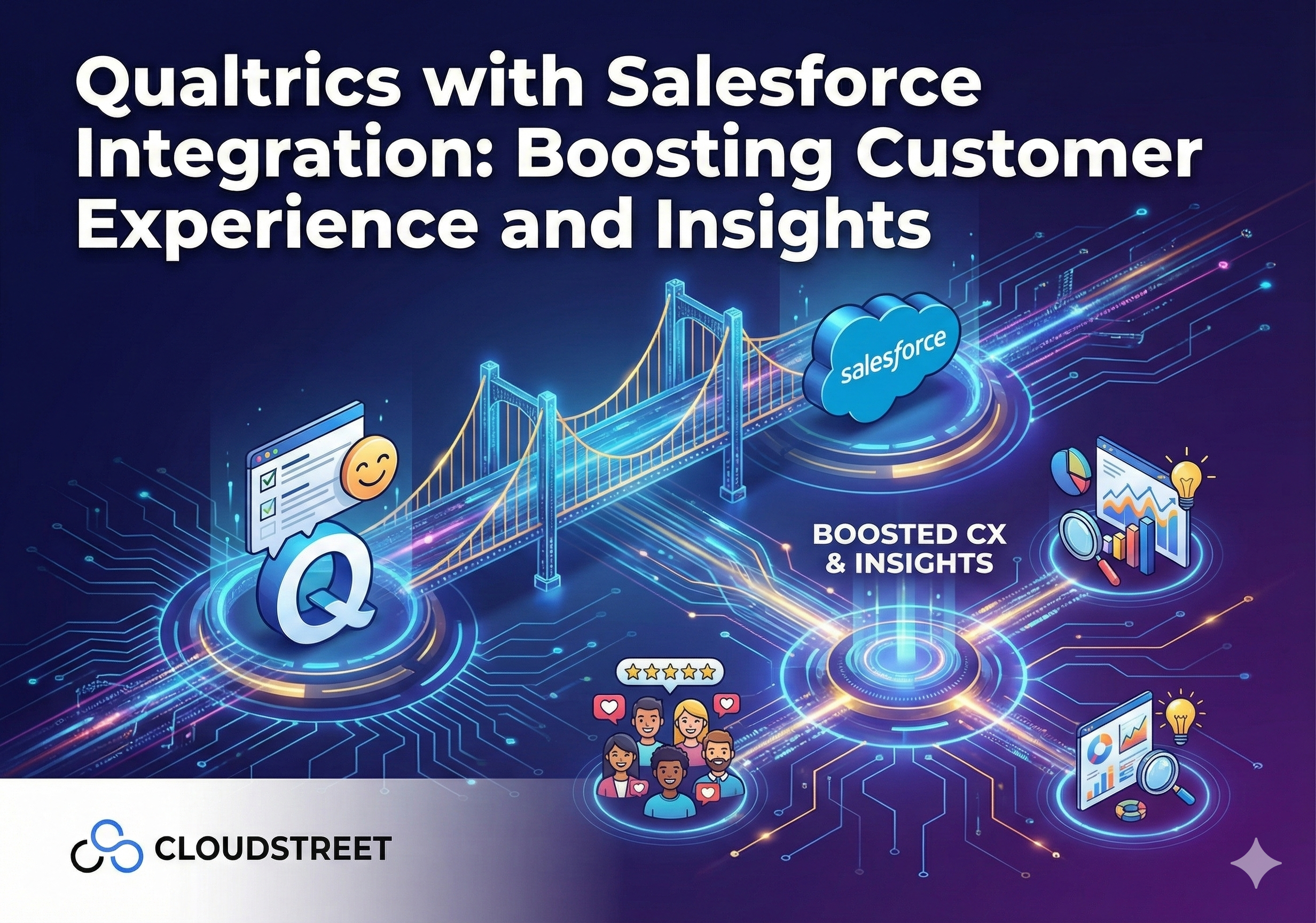
Qualtrics with Salesforce Integration: Boosting Customer Experience and Insights
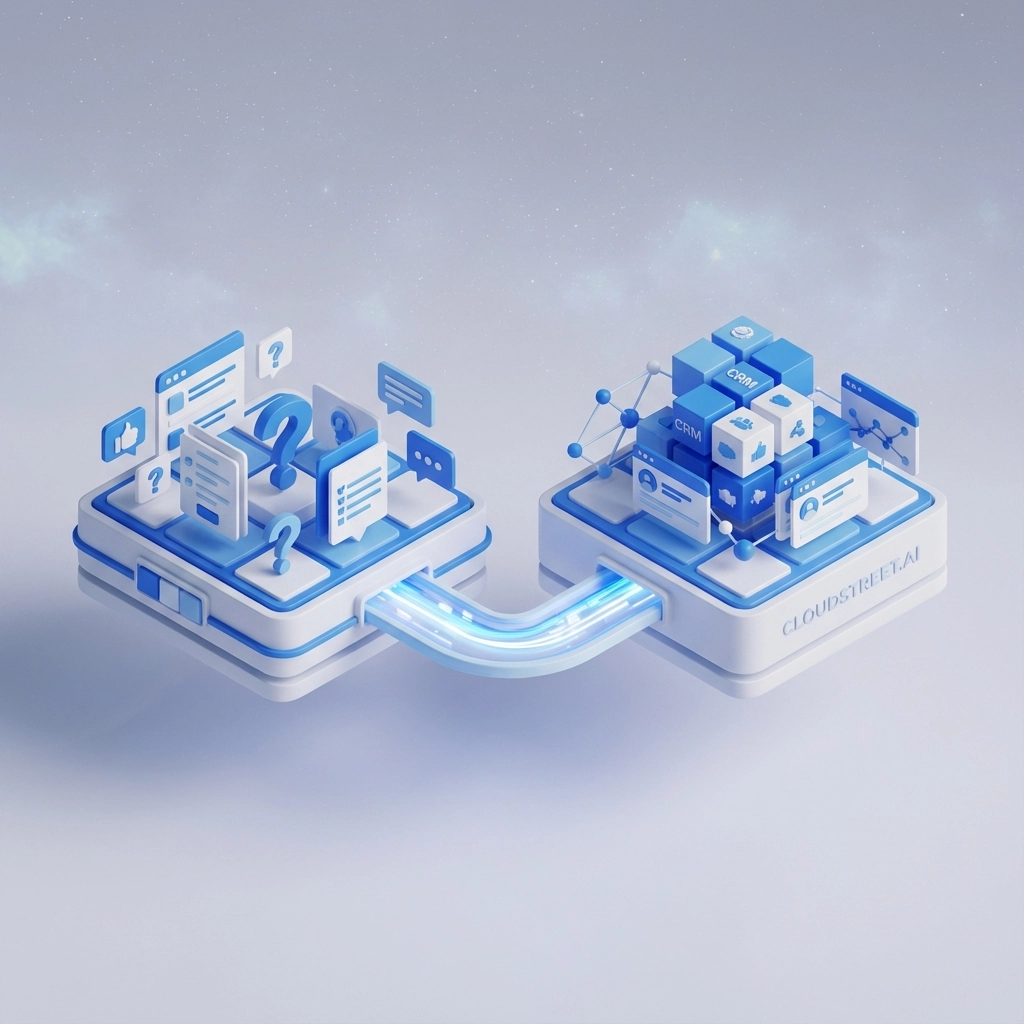
Customer feedback and CRM data shouldn’t live in separate worlds. When you integrate Qualtrics with Salesforce, you’re creating a powerhouse combination that transforms how your business understands and serves customers. This integration bridges the gap between what customers say and what your sales data shows, giving you a complete picture that drives real results.
At Cloudstreet, we’ve helped businesses across Houston, Texas and globally unlock the full potential of this integration. The results? Better customer insights, improved satisfaction scores, and measurable ROI that makes executives smile. Let’s dive into how this integration can supercharge your customer experience strategy.
How Qualtrics and Salesforce Work Together
The magic happens when customer feedback flows seamlessly into your CRM. Through workflow automation in Qualtrics, you can trigger surveys based on specific Salesforce events: think deal closures, support tickets, or milestone achievements. The system automatically maps survey responses back to customer records, creating a unified view that your teams can actually use.
Ready to see this integration in action? Our Salesforce services team can set up a demo tailored to your business needs. We’ll show you exactly how this works with your existing data.
The technical setup involves several key data flows that make everything work smoothly:
- Survey triggers activate when Salesforce records change
- Customer responses automatically update CRM fields
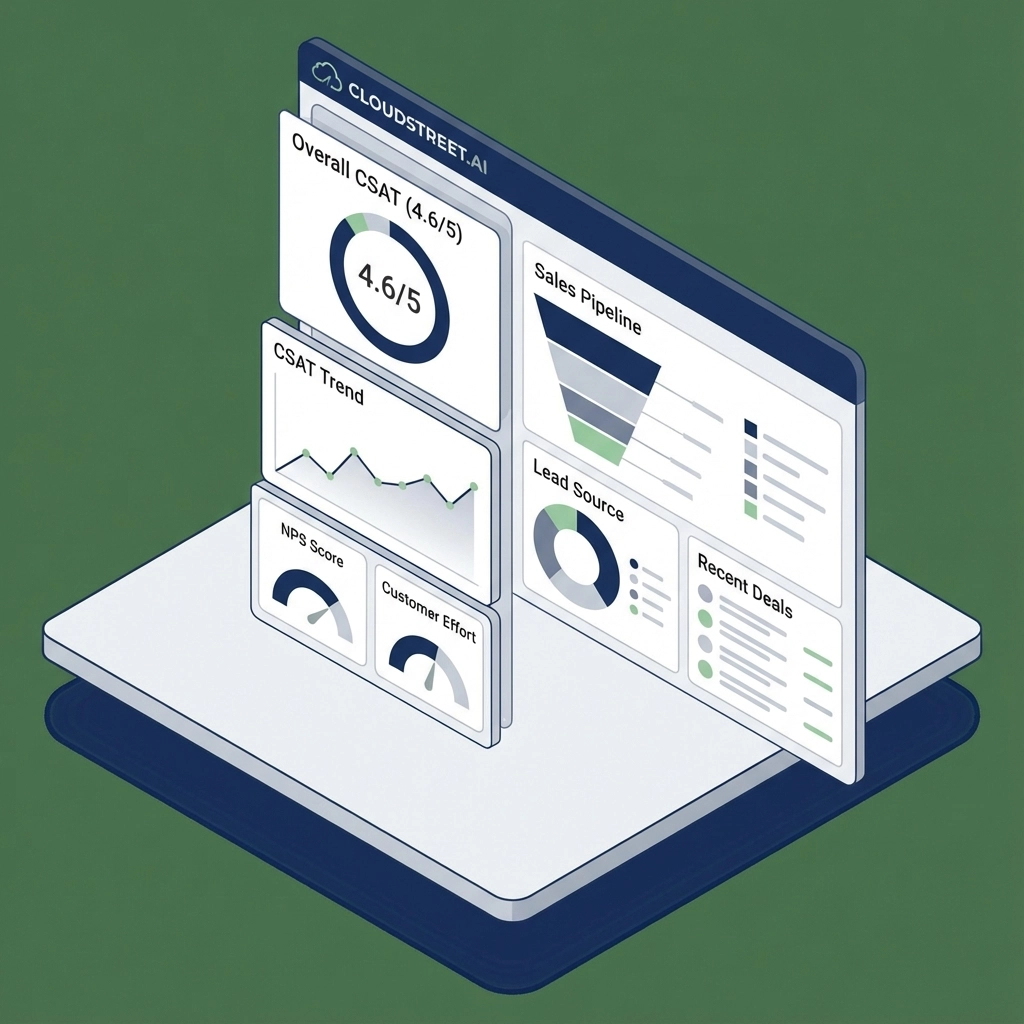
- Feedback dashboards embed directly in Salesforce
- Response mapping creates new leads or updates existing records
This isn’t just about connecting two systems: it’s about creating a feedback loop that actually improves your business operations.
8 Game-Changing Benefits of Integration
Here are the top benefits we see our clients achieve when they integrate Qualtrics with Salesforce:
- Automated feedback collection at every customer touchpoint
- Real-time customer sentiment tracking within CRM records
- Personalized survey experiences based on Salesforce data
- Streamlined lead generation from survey responses
- Enhanced customer segmentation using feedback insights
- Faster issue resolution with integrated support workflows
- Improved sales forecasting using satisfaction metrics
- Unified reporting dashboards combining CRM and feedback data
The operational efficiency gains are immediate. Instead of juggling multiple platforms, your teams work from one source of truth. Sales reps see customer satisfaction scores right next to opportunity data. Support teams get feedback context before they even pick up the phone.
Real-World Use Cases That Drive Results
Post-Purchase Satisfaction Tracking: Automatically trigger customer satisfaction surveys after deals close. The feedback flows directly into the account record, giving account managers instant insights into client health. We’ve seen clients reduce churn by 25% using this approach.
Lead Qualification Enhancement: Use survey responses to automatically score and route new leads. When someone fills out a product interest survey, the integration creates a qualified lead in Salesforce with all the context your sales team needs.
Customer Journey Optimization: Track satisfaction at every stage: from first demo to renewal. The integrated data reveals exactly where customers get stuck or excited, helping you optimize the entire experience.
Product Feedback Integration: Connect product satisfaction surveys to opportunity records. Your product team gets direct customer feedback tied to revenue data, making prioritization decisions much clearer.
Want to implement these use cases in your organization? Let’s talk. Our Houston-based team has experience with businesses of all sizes, from local Texas companies to global enterprises.
Setting Up for Success: Implementation Best Practices
The integration setup requires thoughtful planning to maximize value. Start by mapping your customer journey and identifying the key moments where feedback matters most. Not every interaction needs a survey: focus on high-impact touchpoints that drive business decisions.
Data quality becomes critical when systems connect. Clean up your Salesforce data before integration to ensure accurate mapping. Establish clear naming conventions and field structures that both systems can understand.
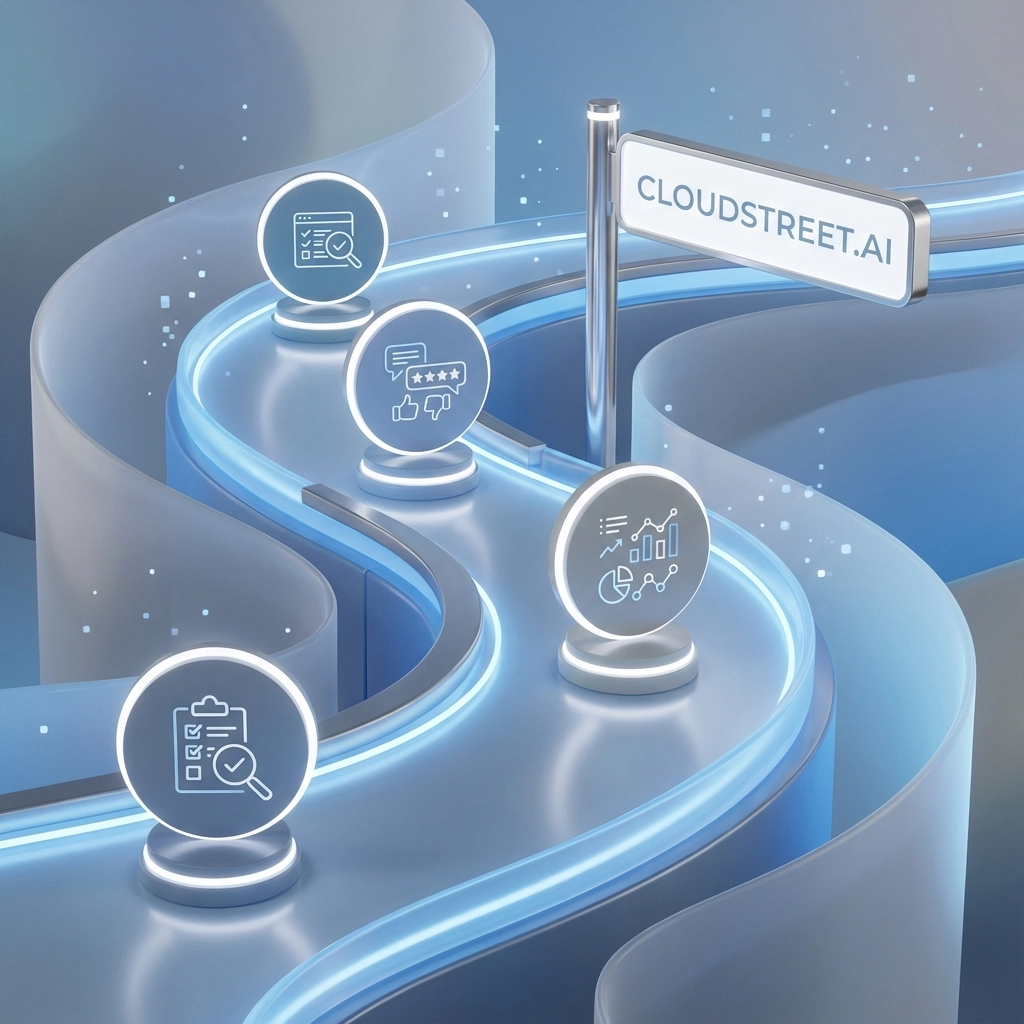
Response mapping strategy determines how valuable your integrated data becomes. Plan which survey responses should update which Salesforce fields, and consider how historical data will transfer. Our implementation team typically recommends starting with 3-5 key data points and expanding from there.
Training your teams on the integrated workflows prevents adoption issues. Sales reps need to understand how feedback impacts their pipeline management. Customer success teams should know how to act on satisfaction alerts. Marketing teams can leverage satisfaction data for targeting and messaging.
Measuring ROI and Business Impact
The financial benefits of Qualtrics-Salesforce integration show up in multiple ways. Customer acquisition costs typically decrease because you’re targeting better-qualified leads. Customer lifetime value increases as satisfaction data helps you retain and upsell existing accounts.
We track several key metrics with our clients:
- Survey response rates (usually improve 40-60% with contextual triggers)
- Lead conversion rates (often see 20-30% improvement with enhanced qualification)
- Customer satisfaction scores (baseline measurement for improvement tracking)
- Churn reduction percentages (typically 15-25% improvement with proactive feedback loops)
- Sales cycle length (often shortens when reps have satisfaction context)
Ready to calculate your potential ROI? Our Salesforce specialists can run the numbers based on your current metrics and integration goals.
The soft benefits matter too. Teams make faster decisions when they have complete customer context. Customer relationships improve when feedback drives action. Your competitive advantage grows as you respond to customer needs more effectively than competitors.

Technical Considerations and Scalability
Data synchronization requires careful planning, especially for high-volume organizations. The integration can handle up to 5 Salesforce instances per Qualtrics account, supporting complex organizational structures with development, staging, and production environments.
Security and compliance standards matter more when systems connect. Ensure your setup meets industry requirements for data protection. The integration supports role-based access controls, so only appropriate team members see sensitive feedback data.
Performance optimization becomes important as data volumes grow. Regular monitoring of sync jobs and response times helps maintain smooth operations. Our technical team typically recommends quarterly health checks to ensure everything runs optimally.
Why Choose Cloudstreet for Your Integration
We’ve implemented Qualtrics-Salesforce integrations for businesses across industries: from aviation aftermarket companies to SaaS providers. Our Houston-based team understands both the technical requirements and business strategy needed for success.
Three reasons clients choose us for their integration projects:
- Proven methodology that minimizes implementation risks
- Ongoing support that ensures long-term success
- ROI focus that ties technical implementation to business outcomes
Our approach starts with understanding your customer journey and business goals. We don’t just connect systems: we design workflows that drive measurable improvements in customer experience and business results.

Ready to transform how your business handles customer feedback? Schedule a consultation with our Salesforce services team. We’ll assess your current setup, identify integration opportunities, and create a roadmap that delivers real business value.
The integration of Qualtrics with Salesforce represents more than a technical connection: it’s a strategic advantage that puts customer voice at the center of your business decisions. With the right implementation partner, this integration becomes a competitive differentiator that drives growth, improves satisfaction, and delivers measurable ROI.
Category
Discover insights that drive results - explore out latest blog posts now
Case Study: How Highland Cabinetry Colorado Built a Modern Wholesale Powerhouse on Salesforce B2B Commerce Cloud
In the world of high-end cabinetry, timing is everything. When [...]
Agentforce ROI: 7 Ways to Maximize Your Salesforce AI Investment
You've heard the buzz. Salesforce Agentforce is supposed to revolutionize [...]
Salesforce B2B Commerce Cloud Partner & Consultant Guide
You're about to drop serious money on a Salesforce B2B [...]