Outgrowing Salesforce Payments? When to Level Up Your Payment Strategy
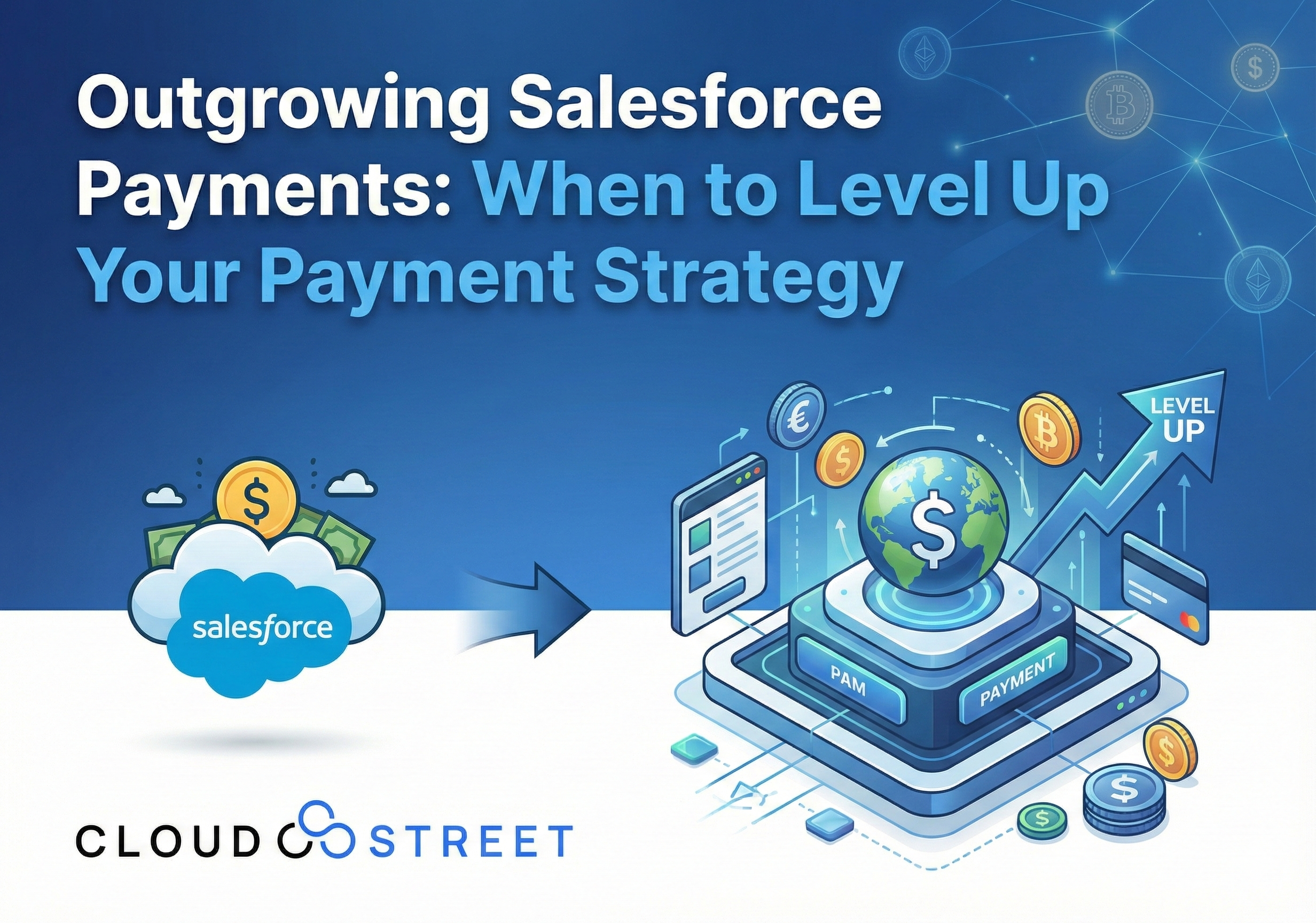
Let’s be real for a second. Salesforce Payments is pretty great when you’re starting out. It’s native. It’s simple. It gets the job done.
But here’s the thing about business growth: what works at one stage can become a bottleneck at the next. And if you’re reading this, you’re probably feeling that squeeze already.
So let’s talk about when Salesforce Payments stops being your best friend: and what to do about it.
The Honeymoon Phase: Why Salesforce Payments Works (At First)
When you first set up Salesforce Payments, it feels like magic. Everything lives in one place. Your sales team can take payments without leaving the CRM. Invoices go out, money comes in, everyone’s happy.
For small teams and straightforward transactions, it’s a no-brainer. One-time charges? Easy. Basic payment links? Done. Quick setup? Absolutely.
But then your business starts to grow. And suddenly, “simple” starts feeling a lot like “limited.”

5 Signs You’ve Outgrown Salesforce Payments
Here’s the honest truth: Salesforce Payments wasn’t built to be everything to everyone. It was built to be a solid starting point. If any of these sound familiar, it might be time to level up.
1. You Need More Than Four Gateway Options
Salesforce Payments supports a limited set of pre-integrated payment gateways: specifically Authorize.net, Cybersource, and Payeezy. That’s it.
If your business needs to process payments through other providers, or you want to route transactions through multiple gateways for better approval rates, you’re going to hit a wall pretty fast.
2. Failed Payments Are Killing Your Revenue
Here’s a stat that hurts: failed payments cost businesses billions every year. And Salesforce Payments offers minimal control over failed payment handling and recovery workflows.
No automated retries. No smart dunning. No easy way to chase down that revenue before it disappears forever.
3. Your Billing Model Got Complicated
One-time charges are easy. But what happens when you introduce:
- Recurring subscriptions
- Usage-based billing
- Tiered pricing models
- Multi-currency transactions
Salesforce Payments wasn’t designed for that level of complexity. If your finance team is building workarounds in spreadsheets, that’s a red flag.
4. You’re Experiencing Integration Headaches
Payment processing delays due to incompatibility between Salesforce and external systems are more common than you’d think. If your payment data isn’t syncing in real-time: or worse, requires manual reconciliation: you’re losing time and accuracy.
5. Lightning-Only Limitations Are Cramping Your Style
Fun fact: Salesforce Payments is only available in Lightning Experience. If your organization has specific infrastructure requirements or legacy systems in play, this constraint can be a dealbreaker.
Feeling seen? You’re not alone. Businesses from Houston to Hong Kong run into these same growing pains. That’s exactly why we built solutions to help. Check out our PayNow Quickstart package to see how we bridge the gap.
The Real Cost of Staying Too Long
Here’s what nobody tells you: sticking with a payment solution you’ve outgrown doesn’t just slow you down. It actively costs you money.
Lost revenue from failed payments that never get retried. Wasted hours from manual reconciliation. Missed opportunities because your finance team is too busy firefighting to focus on strategy.
And let’s not forget the customer experience. When payments are clunky, customers notice. And they remember.
4 Questions to Ask Before Making the Switch
Before you rip and replace anything, take a breath. Here are four questions to help you figure out if it’s really time to move on.
1. What’s My Transaction Volume Looking Like?
If you’re processing hundreds (or thousands) of transactions per month, the limitations of Salesforce Payments will feel a lot heavier than if you’re processing a dozen.
2. How Complex Is My Billing?
Simple invoices? Salesforce Payments can probably hang. Subscriptions, usage-based models, or hybrid pricing? Time to explore other options.
3. Am I Operating Globally?
Multi-currency support, regional payment methods, and compliance with local regulations all add layers of complexity that Salesforce Payments wasn’t built to handle elegantly.
4. What Does My Tech Stack Look Like?
If you’re running a lean Salesforce-only environment, native solutions make sense. But if you’ve got ERP systems, external billing platforms, or complex integrations in the mix, you need something more flexible.
Not sure where you stand? We help businesses figure this out every day. Reach out to our team for a quick gut-check.
Third-Party Payment Apps: What’s Out There
Once you decide to level up, you’ve got options. Third-party payment applications can fill the gaps Salesforce Payments leaves behind.
Here’s what to look for:
- Multi-gateway support for better routing and approval rates
- Automated dunning and retry logic to recover failed payments
- Subscription management built for complex billing models
- Real-time sync with Salesforce and your other systems
- Lower processing fees (because every percentage point matters at scale)
The right solution depends on your specific needs. There’s no one-size-fits-all answer here: which is exactly why having a partner who understands the landscape matters.

How CLOUDSTREET Helps You Navigate the Transition
Here’s where we come in.
At CLOUDSTREET, we’re an IT consulting firm based in Houston, Texas: but we work with customers locally and globally. We’ve helped businesses of all sizes navigate exactly this kind of crossroads.
Our PayNow Quickstart package is designed specifically for Salesforce users who need more from their payment strategy without the headache of a massive overhaul.
What you get:
- Assessment of your current payment setup
- Recommendations tailored to your billing complexity
- Implementation support to get you up and running fast
- Ongoing guidance as your needs evolve
We’re not here to sell you the most expensive solution. We’re here to find the right one.
Ready to talk? Let’s figure out your next move together.
The Bottom Line
Salesforce Payments is a fantastic tool: for the right stage of business. But growth changes everything. And clinging to a solution you’ve outgrown isn’t loyalty. It’s friction.
If you’re bumping up against gateway limits, losing revenue to failed payments, or spending way too much time on manual workarounds, it’s worth exploring what else is out there.
The good news? You don’t have to figure it out alone.
Whether you’re scaling fast, expanding globally, or just tired of the spreadsheet chaos, CLOUDSTREET is here to help you find a payment strategy that actually fits where you’re headed: not just where you’ve been.

Let’s build something better. Explore our PayNow Quickstart and see what’s possible.
Category
Discover insights that drive results - explore out latest blog posts now

Case Study: How Highland Cabinetry Colorado Built a Modern Wholesale Powerhouse on Salesforce B2B Commerce Cloud
In the world of high-end cabinetry, timing is everything. When [...]

Agentforce ROI: 7 Ways to Maximize Your Salesforce AI Investment
You've heard the buzz. Salesforce Agentforce is supposed to revolutionize [...]
Salesforce B2B Commerce Cloud Partner & Consultant Guide
You're about to drop serious money on a Salesforce B2B [...]