How to Choose a Salesforce Freelancer (And Why CLOUDSTREET’s Cooperative Approach Beats Solo Contractors)
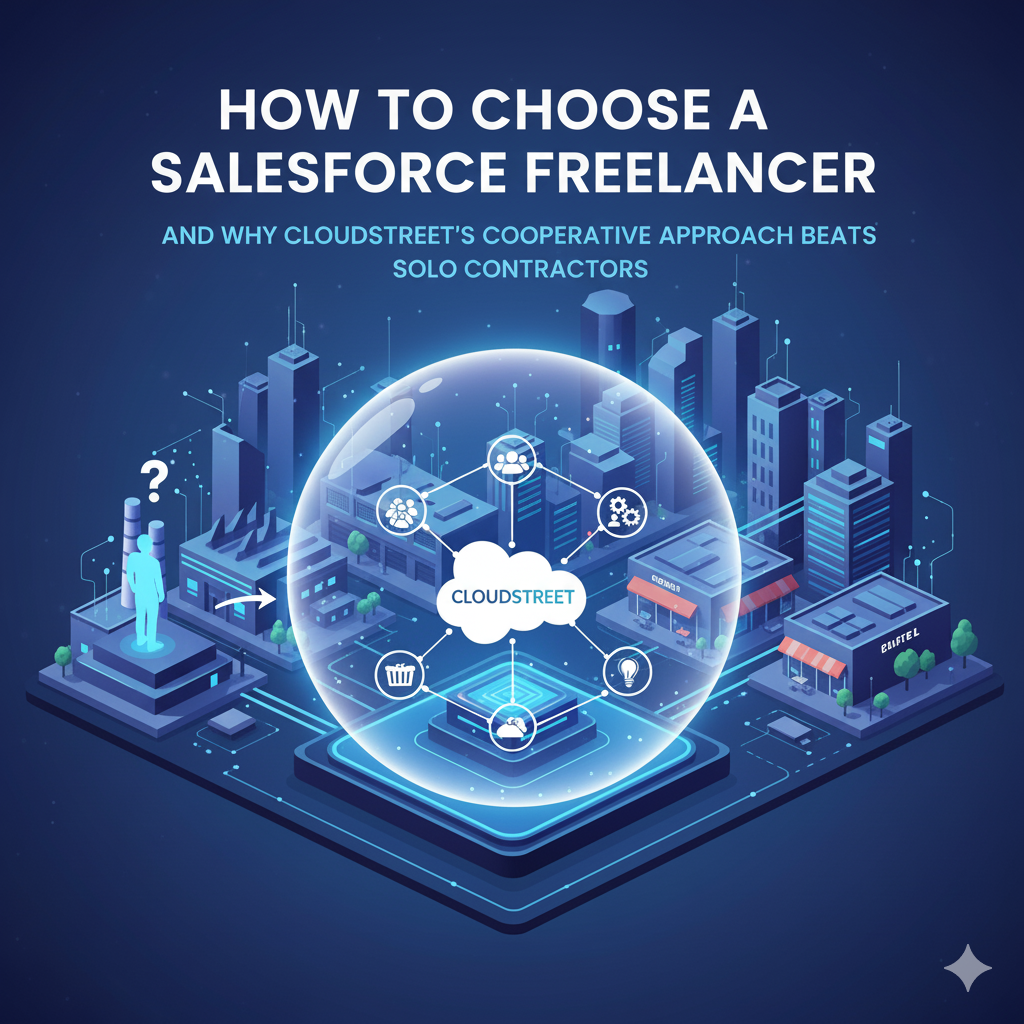
How to Choose a Salesforce Freelancer (And Why CLOUDSTREET’s Cooperative Approach Beats Solo Contractors)
When your Salesforce project needs expert help, the freelancer route seems obvious. Post a job, review some profiles, hire someone, and you’re done, right? Not quite. Choosing the right Salesforce freelancer requires more strategy than most businesses realize: and there’s a hidden risk that could derail your entire project.
Here’s the thing: solo freelancers can be brilliant, but they’re also isolated. When they hit a roadblock, get sick, or face a knowledge gap, your project stops. That’s where CLOUDSTREET’s cooperative approach changes the game. We operate like a team of top-tier freelancers who actually work together, share knowledge, and have each other’s backs.
The Real Challenge of Finding Quality Salesforce Talent
The Salesforce ecosystem is massive and constantly evolving. Finding someone who truly understands your specific needs: whether that’s Sales Cloud customization, Service Cloud implementation, or complex integrations: isn’t just about browsing profiles on freelance platforms.
Most businesses make the mistake of focusing purely on certifications and hourly rates. But here’s what actually matters: proven experience with projects like yours, communication skills that match your team’s style, and the ability to think strategically about your long-term Salesforce goals.
7 Essential Questions to Ask Any Salesforce Freelancer
Before you commit to working with any Salesforce consultant, whether solo or part of a team, these questions will reveal whether they’re the real deal:
1. “Can you walk me through a similar project you’ve completed?”
Look for specific details, not generic responses. They should explain challenges they faced, how they solved them, and what the business impact was. Vague answers are red flags.
2. “How do you handle scope changes mid-project?”
Salesforce projects evolve. You need someone who can adapt without derailing timelines or budgets.
3. “What’s your approach to data migration and testing?”
Data is your most valuable asset. Their answer should include backup strategies, validation processes, and rollback plans.
4. “How do you stay current with Salesforce updates?”
Salesforce releases updates three times per year. Anyone working in the ecosystem should have a system for staying informed.

5. “Can you provide references from recent clients?”
Don’t just ask for references: actually call them. Ask about communication, problem-solving, and whether they’d hire this person again.
6. “What happens if you’re unavailable during critical phases?”
This is where solo freelancers often stumble. Illness, family emergencies, or other projects can leave you stranded.
7. “How do you document your work and transfer knowledge?”
You need to understand and maintain whatever they build. Poor documentation creates long-term headaches.
Where to Find Qualified Salesforce Freelancers
The usual suspects: Upwork, Freelancer, Guru: are starting points, but they’re not your only options. The Salesforce Trailblazer Community is gold for finding certified professionals. LinkedIn can help you identify consultants with proven track records.
But here’s the catch: the best Salesforce talent often isn’t actively looking for work on these platforms. They’re busy with existing clients or working within established teams.
The Hidden Risks of Going Solo
Working with individual freelancers seems cost-effective and straightforward, but there are risks most businesses don’t consider until it’s too late:
Knowledge Gaps: Even experienced freelancers have areas where they’re less strong. When you need expertise in multiple Salesforce clouds or complex integrations, one person rarely has all the answers.
Single Point of Failure: What happens when your freelancer gets sick, takes vacation, or lands a bigger project? Your work stops, deadlines slip, and you’re back to square one.
Limited Perspective: Solo contractors work in isolation. They don’t have teammates to bounce ideas off, catch potential issues, or suggest better approaches.
No Peer Review: Mistakes happen, but solo freelancers don’t have built-in quality checks. Problems often surface weeks or months later, requiring expensive fixes.
Why CLOUDSTREET’s Cooperative Model Changes Everything
Here’s where we do things differently. CLOUDSTREET operates as an agency, but our structure is unique: we’re essentially a cooperative of top-tier Salesforce freelancers who chose to work together instead of in isolation.
Shared Knowledge, Multiplied Expertise
When you work with CLOUDSTREET, you’re not just getting one person’s knowledge. Our team members actively collaborate, sharing insights from different industries and use cases. That breadth of experience directly benefits your project.
Built-in Backup and Continuity
Nobody gets sick, takes vacation, or faces personal emergencies in isolation here. If your primary consultant is unavailable, another team member can step in seamlessly because we share project knowledge and maintain consistent documentation standards.
Peer Review and Quality Assurance
Every significant decision gets input from multiple perspectives. Our cooperative structure means work gets reviewed by peers who understand both Salesforce best practices and your specific business context.
Innovation Through Collaboration
When freelancers work alone, they tend to stick with familiar approaches. Our team environment encourages creative problem-solving and innovative solutions because ideas get refined through discussion and collaboration.

The CLOUDSTREET Difference in Action
Based right here in Houston, Texas, we serve clients both locally and globally. Our cooperative approach means you get enterprise-level expertise with the agility and personalized attention of working with freelancers.
When a client recently needed a complex integration between Salesforce and their manufacturing ERP system, it wasn’t just one consultant working in isolation. Our team included specialists in Salesforce integration, manufacturing processes, and data architecture: all collaborating to design the optimal solution.
The result? Faster implementation, fewer revisions, and a more robust final system than any single freelancer could have delivered alone.
Making the Right Choice for Your Business
Solo freelancers aren’t inherently bad: many are exceptionally skilled. But ask yourself: can you afford the risks that come with relying on one person? Do you have the internal expertise to guide and review their work? Can you handle project delays if they become unavailable?
For most businesses, especially those tackling complex Salesforce implementations or integrations, a collaborative approach delivers better results with less risk.
Questions to Ask Any Salesforce Team or Agency
Whether you’re considering CLOUDSTREET or another team-based approach, here are the key questions:
- How do team members collaborate on projects?
- What happens if a key person leaves during our project?
- How do you ensure knowledge transfer and documentation?
- Can we speak with team members who would actually work on our project?
- What’s your process for peer review and quality assurance?
Ready to Experience the Cooperative Advantage?
Don’t risk your Salesforce project on a solo contractor who might disappear when you need them most. CLOUDSTREET’s cooperative model gives you the best of both worlds: freelancer agility with team reliability and depth.
Schedule a consultation with our team to discuss your Salesforce needs. We’ll introduce you to the specific team members who would work on your project and show you exactly how our collaborative approach delivers better results.
Want to see our cooperative in action? Check out our client testimonials to learn how our team approach has helped businesses transform their Salesforce implementations.
The choice between isolated freelancers and collaborative teams isn’t just about cost; it’s about project success, timeline reliability, and long-term results. Choose wisely.
Category
Discover insights that drive results - explore out latest blog posts now
Case Study: How Highland Cabinetry Colorado Built a Modern Wholesale Powerhouse on Salesforce B2B Commerce Cloud
In the world of high-end cabinetry, timing is everything. When [...]
Agentforce ROI: 7 Ways to Maximize Your Salesforce AI Investment
You've heard the buzz. Salesforce Agentforce is supposed to revolutionize [...]
Salesforce B2B Commerce Cloud Partner & Consultant Guide
You're about to drop serious money on a Salesforce B2B [...]