Flosum DevOps with Salesforce – A Strategic Integration for Agile Innovation
DevOps has become the backbone of modern software development, and when it comes to Salesforce, having the right DevOps platform can make or break your team’s productivity. Enter Flosum – a 100% native Salesforce DevOps solution that’s changing how organizations approach release management, version control, and continuous delivery within the Salesforce ecosystem.
At Cloudstreet, based in Houston Texas with customers across the globe, we’ve seen firsthand how Flosum transforms Salesforce development workflows for mid-size and enterprise organizations. Let’s dive into what makes this integration so strategic for agile innovation.
What is Flosum DevOps?
Flosum is a comprehensive DevOps platform built specifically for Salesforce, operating entirely within your Salesforce environment with zero data movement outside your organization. Unlike traditional DevOps tools that require external integrations and data transfers, Flosum provides a native solution that handles the complete development lifecycle – from version control and automated testing to deployment and rollback capabilities.
This native approach isn’t just a technical advantage; it’s a strategic one. Organizations dealing with sensitive data in healthcare, finance, or government sectors can maintain compliance requirements like HIPAA and GDPR without worrying about data leaving their controlled environment.

Ready to streamline your Salesforce DevOps? Contact our Salesforce experts to discuss how Flosum can transform your development process.
7 Key Benefits of Flosum DevOps Integration
1. Native Architecture Eliminates Security Concerns
Flosum’s 100% native architecture means your metadata never leaves Salesforce. This eliminates the security risks associated with external CI/CD tools and third-party integrations. For organizations with strict compliance requirements, this native approach provides peace of mind while maintaining operational efficiency.
2. AI-Powered Automation Reduces Manual Work
Flosum’s AI Agents, powered by Salesforce Agentforce, automate repetitive tasks that traditionally consume development time. From automated documentation generation to security analysis and deployment error resolution, AI handles the busywork so your team can focus on innovation.
3. Visual Release Management Improves Team Collaboration
The platform provides clear visual representations of environments, branches, and user stories. Team members can easily track progress, identify bottlenecks, and coordinate releases without getting lost in complex technical details.
4. Flexible Branching Strategies Support Any Workflow
Whether your team follows Git Flow, feature branching, or custom workflows, Flosum adapts to your preferred development methodology rather than forcing you to change established processes.
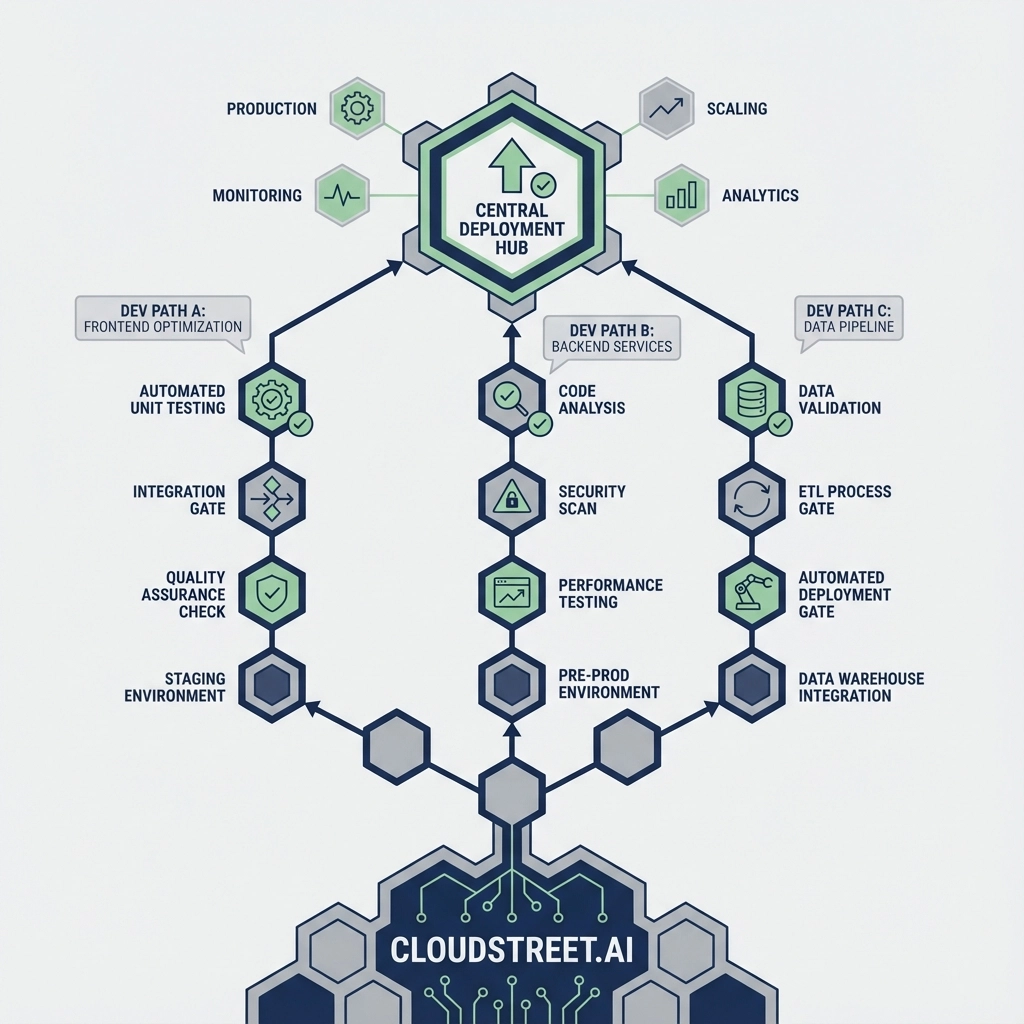
5. Automated Testing Ensures Code Quality
Built-in static code analysis, Apex code validation, and automated testing capabilities catch issues before they reach production. This proactive approach reduces bugs and improves overall system reliability.
6. One-Click Rollback Minimizes Downtime
When issues arise in production, Flosum’s one-click rollback feature quickly reverts changes, minimizing disruption to business operations. This capability is crucial for organizations where system availability directly impacts revenue.
7. Seamless Integration with Existing Tools
While native to Salesforce, Flosum integrates smoothly with popular development tools like Git, Jira, and ServiceNow. This allows teams to maintain their preferred toolchain while benefiting from native Salesforce capabilities.
Interested in implementing Flosum for your organization? Explore our Salesforce services to learn about our proven implementation methodology.
Industry-Specific Use Cases and Impact
Healthcare: Maintaining HIPAA Compliance
Healthcare organizations using Salesforce Health Cloud can leverage Flosum’s native architecture to maintain HIPAA compliance throughout the development process. Patient data never leaves the Salesforce environment, and comprehensive audit trails ensure regulatory requirements are met.
Financial Services: Meeting Regulatory Standards
Financial institutions benefit from Flosum’s secure environment and detailed change tracking. Whether deploying updates to Salesforce Financial Services Cloud or custom banking applications, teams can maintain compliance with SOX, PCI DSS, and other regulatory frameworks.
Manufacturing: Supporting Complex Integrations
Manufacturing companies often have complex Salesforce integrations with ERP systems, IoT devices, and supply chain platforms. Flosum’s dependency management and testing capabilities ensure these integrations remain stable throughout the development lifecycle.

Government: Ensuring Data Security
Government agencies using Salesforce Government Cloud require the highest levels of security. Flosum’s native architecture and zero data movement policy align perfectly with government security requirements while enabling agile development practices.
Implementation Considerations for Mid-Size and Enterprise Organizations
Team Structure and Responsibilities
Successful Flosum implementation requires clear role definitions. Development teams handle day-to-day coding and testing, while DevOps engineers manage deployment pipelines and environment configurations. Release managers oversee the overall process and coordinate between teams.
Environment Strategy
Most organizations benefit from a multi-environment strategy including development sandboxes, integration environments, user acceptance testing (UAT) environments, and production. Flosum’s visual environment tracking makes managing this complexity straightforward.
Change Management Process
Implementing Flosum often requires updating existing change management processes. Teams accustomed to manual deployments need training on automated pipelines and continuous integration practices. The visual nature of Flosum’s interface helps ease this transition.
Planning a Salesforce DevOps transformation? Our Houston-based team has guided organizations worldwide through successful implementations. Schedule a consultation to discuss your specific needs.
Measuring Success: KPIs for Flosum DevOps
Organizations should track several key performance indicators to measure Flosum’s impact:
- Deployment Frequency: How often teams can safely deploy to production
- Lead Time: Time from code commit to production deployment
- Mean Time to Recovery (MTTR): Speed of resolving production issues
- Change Failure Rate: Percentage of deployments causing production problems
- Developer Productivity: Time saved on manual processes and administrative tasks
These metrics typically show significant improvement within the first quarter of Flosum implementation, with continued gains as teams become more proficient with the platform.
The Strategic Advantage: Why Native Matters
The decision between native Salesforce DevOps tools like Flosum and external solutions often comes down to strategic priorities. Organizations prioritizing security, compliance, and seamless integration typically find native solutions more aligned with their needs.
External tools may offer broader functionality across multiple platforms, but they introduce complexity in terms of data security, integration maintenance, and user training. For organizations heavily invested in the Salesforce ecosystem, native solutions provide a clearer path to DevOps maturity.

Getting Started with Flosum DevOps
Implementing Flosum requires careful planning and expertise. Organizations should begin with a pilot project to validate the approach and build internal capabilities before scaling across larger development teams.
Key success factors include executive sponsorship, dedicated implementation resources, and comprehensive change management. Teams that invest in proper training and process design see faster adoption and better results.
Ready to transform your Salesforce development process? Connect with Cloudstreet’s Salesforce specialists to explore how Flosum can accelerate your agile innovation goals.
Flosum DevOps represents a strategic approach to Salesforce development that aligns with modern agile practices while maintaining the security and compliance requirements of enterprise organizations. As Salesforce continues to evolve, having robust DevOps capabilities becomes increasingly critical for organizations looking to maximize their platform investment and deliver value to their users.
The combination of native architecture, AI-powered automation, and comprehensive DevOps capabilities makes Flosum a compelling choice for organizations ready to modernize their Salesforce development practices. With proper implementation and change management, teams can achieve significant improvements in deployment frequency, code quality, and overall development efficiency.
Category
Discover insights that drive results - explore out latest blog posts now

Case Study: How Highland Cabinetry Colorado Built a Modern Wholesale Powerhouse on Salesforce B2B Commerce Cloud
In the world of high-end cabinetry, timing is everything. When [...]

Agentforce ROI: 7 Ways to Maximize Your Salesforce AI Investment
You've heard the buzz. Salesforce Agentforce is supposed to revolutionize [...]

Salesforce B2B Commerce Cloud Partner & Consultant Guide
You're about to drop serious money on a Salesforce B2B [...]