Ecommerce for Manufacturers: Salesforce Commerce Cloud for B2B & D2C Success in 2026
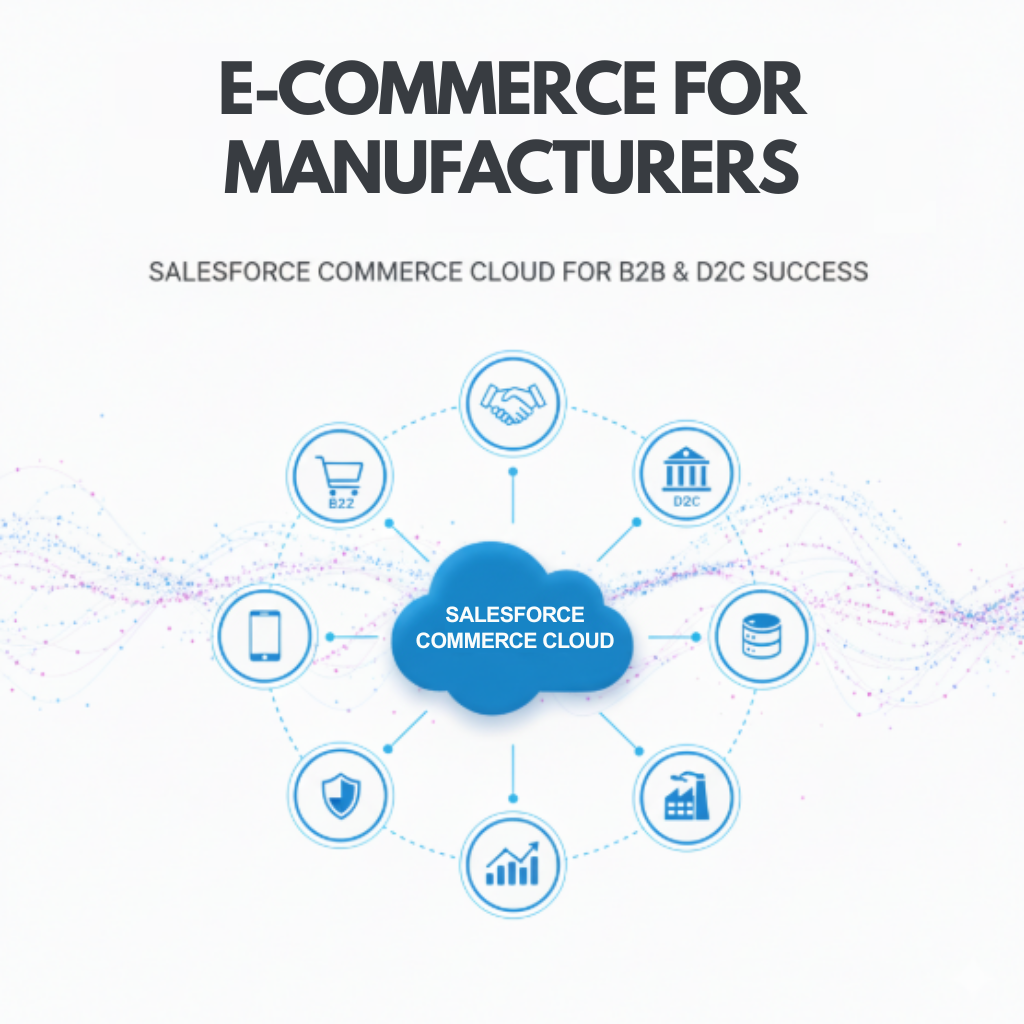
Ecommerce for Manufacturers: Salesforce Commerce Cloud for B2B & D2C Success in 2026
Manufacturing companies are embracing digital transformation at an unprecedented pace, moving beyond traditional sales channels to create comprehensive ecommerce experiences. Unlike retail businesses that primarily serve individual consumers, manufacturers face unique challenges: complex B2B relationships, intricate product configurations, bulk ordering requirements, and the growing need to reach end consumers directly.
Salesforce Commerce Cloud offers manufacturers a unified platform to tackle both B2B and direct-to-consumer (D2C) sales channels, delivering measurable results including 27% conversion increases and 40% performance improvements. For manufacturers ready to modernize their digital operations, understanding how to leverage Commerce Cloud’s specialized features can transform customer relationships and drive significant growth.
Why Manufacturing Ecommerce Differs from Traditional Retail
Manufacturing ecommerce operates in a fundamentally different landscape than traditional retail. While retailers focus on individual consumer purchases, manufacturers must navigate complex account hierarchies, contract-based pricing, approval workflows, and relationships that often span decades.
Traditional retail ecommerce prioritizes quick checkout experiences and impulse purchases. Manufacturing ecommerce requires sophisticated tools for bulk ordering, where a single transaction might include hundreds or thousands of items. Product catalogs need dynamic pricing based on customer relationships, volume discounts, and negotiated contracts rather than fixed pricing models.
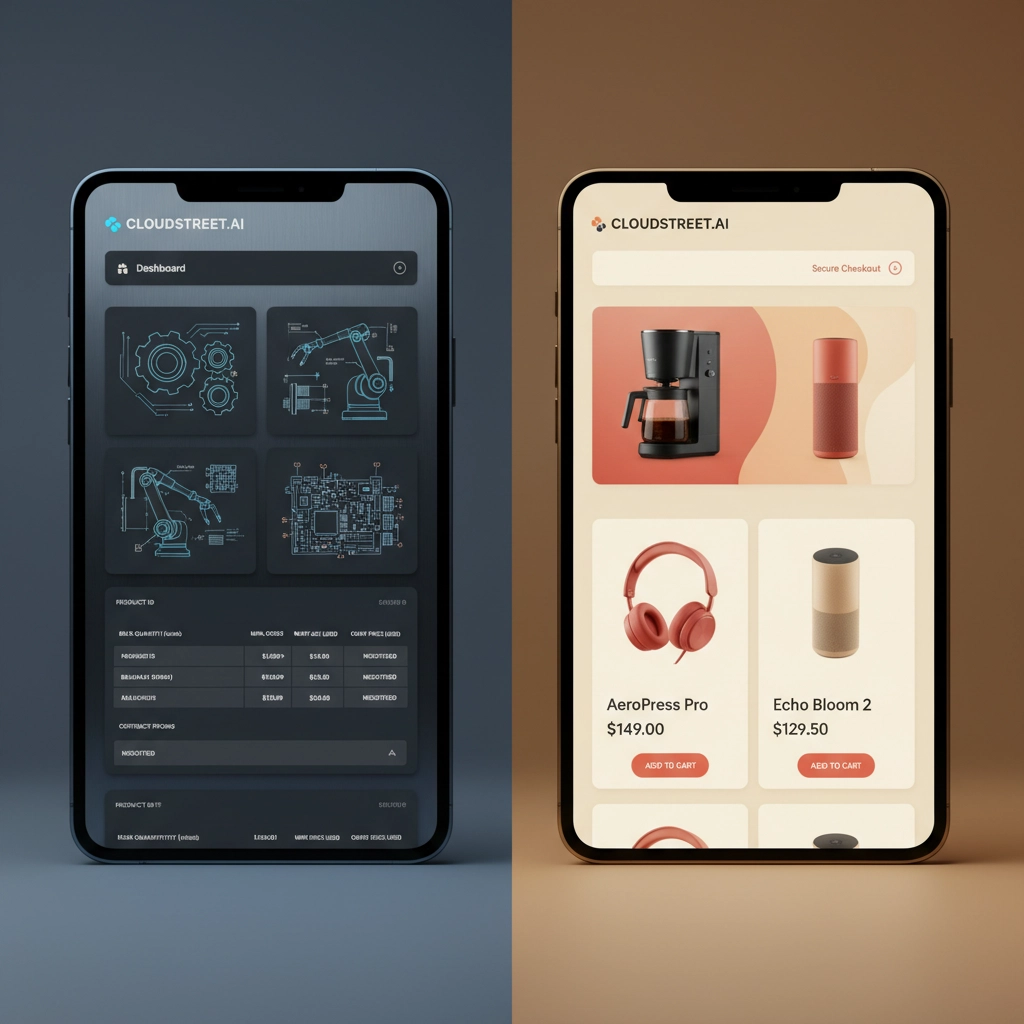
Additionally, manufacturers increasingly need hybrid approaches: maintaining their traditional B2B sales while exploring direct-to-consumer opportunities. This dual-channel strategy requires platforms that can seamlessly manage both business customers ordering industrial components and individual consumers purchasing finished products directly from the manufacturer.
5 Essential Salesforce B2B Commerce Cloud Features for Manufacturers
1. Mega Shopping Carts and Bulk Ordering
Salesforce B2B Commerce Cloud handles the massive shopping carts that manufacturing customers require. Unlike consumer retail where cart abandonment occurs with just a few items, B2B manufacturing customers regularly place orders containing hundreds or thousands of components. The platform supports these large-scale transactions while maintaining performance and providing intuitive management tools.
2. Contract-Based Pricing and Customer-Specific Catalogs
Manufacturers can implement sophisticated pricing strategies including volume discounts, contract-specific rates, and negotiated pricing for individual customers or distribution partners. The platform presents tailored product catalogs that show only relevant items to specific customer segments, ensuring buyers see appropriate products and pricing for their account level.
3. Advanced Approval Workflows
B2B manufacturing purchases often require multiple approval levels, especially for large orders or new vendors. Commerce Cloud automates these approval processes, routing orders through appropriate stakeholders while maintaining visibility into order status for all parties involved.
4. ERP and CRM Integration
The platform integrates seamlessly with existing ERP systems and Salesforce CRM data, providing a complete 360-degree view of business customers. This integration ensures inventory accuracy, automated pricing updates, and unified customer service across all touchpoints.
5. Flexible Payment and Delivery Options
B2B manufacturing customers need payment flexibility including credit terms, purchase orders, and ACH transfers alongside traditional payment methods. The platform also supports complex delivery requirements with multiple delivery dates, locations, and shipping methods within a single order.
4 Key Salesforce D2C Commerce Cloud Capabilities for Manufacturers
1. AI-Powered Personalization
Salesforce Einstein delivers intelligent product recommendations and targeted promotions based on customer behavior, helping manufacturers enhance engagement and increase sales when selling directly to consumers. This AI capability learns from customer interactions to optimize the shopping experience continuously.
2. Omnichannel Integration
For manufacturers exploring D2C channels, Commerce Cloud integrates online, mobile, and potential physical touchpoints into a unified system. This ensures consistent customer experiences whether consumers interact through digital channels or physical locations.
3. Global Expansion Support
The platform supports multi-language and multi-currency capabilities, enabling manufacturers to expand D2C operations into new geographic markets with localized shopping experiences tailored to regional preferences and requirements.
4. Real-Time Inventory and Order Management
D2C operations require accurate inventory visibility and streamlined order fulfillment. Commerce Cloud provides real-time inventory updates and automated order management, ensuring customer satisfaction through accurate delivery promises and fulfillment tracking.
Hybrid B2B and D2C Strategies for Modern Manufacturers
Many successful manufacturers implement hybrid approaches that serve both business customers and end consumers through integrated platforms. This strategy allows companies to maintain established B2B relationships while capturing additional value through direct consumer sales.

Hybrid implementations require careful consideration of channel conflicts, pricing strategies, and customer service approaches. Salesforce Commerce Cloud enables manufacturers to manage these complexities through unified data management, separate storefronts for different customer types, and integrated inventory management that prevents overselling across channels.
5 Implementation Best Practices for Manufacturing Commerce Cloud Projects
1. Comprehensive Discovery and Use Case Definition
Successful implementations begin with thorough discovery sessions that map existing business processes, customer requirements, and integration needs. This phase identifies critical workflows, custom pricing requirements, and integration touchpoints that will influence platform configuration.
2. MVP Approach for Product Catalogs
Rather than migrating entire product catalogs immediately, manufacturers benefit from starting with core product lines or key customer segments. This MVP approach allows teams to refine processes and configurations before expanding to the complete catalog.
3. Advanced Product Configurators
Many manufacturing products require complex configuration options, customization capabilities, or bundling features. Implementing robust product configurators early in the process ensures customers can accurately specify requirements while reducing sales team workload.
4. Change Management and Training Programs
Digital transformation requires comprehensive change management to ensure adoption across sales teams, customer service representatives, and customers themselves. Structured training programs and ongoing support maximize platform utilization and user satisfaction.
5. Phased Integration Strategy
Complex ERP and CRM integrations benefit from phased approaches that prioritize critical data flows while building toward comprehensive integration. This strategy reduces implementation risk while delivering value incrementally.
Why Partner with Commerce Cloud Specialists
Implementing Salesforce Commerce Cloud for manufacturing requires deep understanding of both the platform’s capabilities and the unique requirements of industrial businesses. CLOUDSTREET, based in Houston, Texas, specializes in Commerce Cloud implementations for manufacturers, serving clients both locally and globally.
Our team of Salesforce experts understands the complexities of manufacturing ecommerce, from intricate B2B workflows to emerging D2C opportunities. We’ve helped manufacturers elevate their B2B sales through Commerce Cloud and ERP integration, delivering solutions that drive measurable business results.
Working with experienced Commerce Cloud specialists ensures your implementation leverages platform best practices, avoids common pitfalls, and delivers maximum return on investment. Our collaborative approach means you’re not just hiring individual consultants: you’re partnering with a team that shares knowledge, skills, and proven methodologies across every project.

Transform Your Manufacturing Business with Commerce Cloud
Salesforce Commerce Cloud represents a strategic opportunity for manufacturers to modernize customer relationships, streamline operations, and capture new revenue opportunities across B2B and D2C channels. The platform’s specialized features for manufacturing: from mega shopping carts to AI-powered personalization: deliver the functionality needed to compete in today’s digital marketplace.
Success requires careful planning, expert implementation, and ongoing optimization. By partnering with experienced Commerce Cloud specialists, manufacturers can navigate the complexities of digital transformation while focusing on core business objectives.
Ready to explore how Salesforce Commerce Cloud can transform your manufacturing business? Schedule a consultation with our Houston-based team to discuss your specific requirements and learn how we’ve helped other manufacturers achieve digital commerce success.
Contact CLOUDSTREET today to begin your Commerce Cloud journey and unlock the full potential of modern manufacturing ecommerce.
Category
Discover insights that drive results - explore out latest blog posts now
Case Study: How Highland Cabinetry Colorado Built a Modern Wholesale Powerhouse on Salesforce B2B Commerce Cloud
In the world of high-end cabinetry, timing is everything. When [...]
Agentforce ROI: 7 Ways to Maximize Your Salesforce AI Investment
You've heard the buzz. Salesforce Agentforce is supposed to revolutionize [...]
Salesforce B2B Commerce Cloud Partner & Consultant Guide
You're about to drop serious money on a Salesforce B2B [...]