BigCommerce vs Salesforce Commerce Cloud B2B: A Practical Comparison for Growing Enterprises
Choosing the right B2B ecommerce platform is one of the most consequential technology decisions a growing enterprise can make. The platform you select will shape your customer experience, operational efficiency, and ability to scale for years to come.
Two names consistently appear in B2B ecommerce conversations: BigCommerce and Salesforce Commerce Cloud. Both are capable platforms, but they serve different needs and organizational profiles. This bigcommerce vs salesforce commerce cloud b2b comparison breaks down the practical differences so you can make an informed decision for your business.
At CLOUDSTREET, we work with manufacturing, distribution, and enterprise clients from our Houston, Texas headquarters: serving customers locally and across the globe. We’ve seen firsthand how the right platform choice accelerates growth while the wrong one creates friction.
Understanding the Two Platforms
Before diving into specifics, it helps to understand what each platform brings to the table.
BigCommerce is a SaaS ecommerce platform that started in the B2C space and has expanded its B2B capabilities over time. It’s known for ease of use, quick deployment, and a straightforward pricing model. BigCommerce appeals to mid-market companies looking for a capable commerce solution without heavy customization requirements.
Salesforce Commerce Cloud B2B (formerly CloudCraze) is purpose-built for complex B2B selling. It lives natively within the Salesforce ecosystem, which means deep CRM integration, advanced personalization, and enterprise-grade scalability. It’s designed for organizations where B2B commerce involves custom pricing, contract terms, multi-tier account structures, and high-volume ordering.
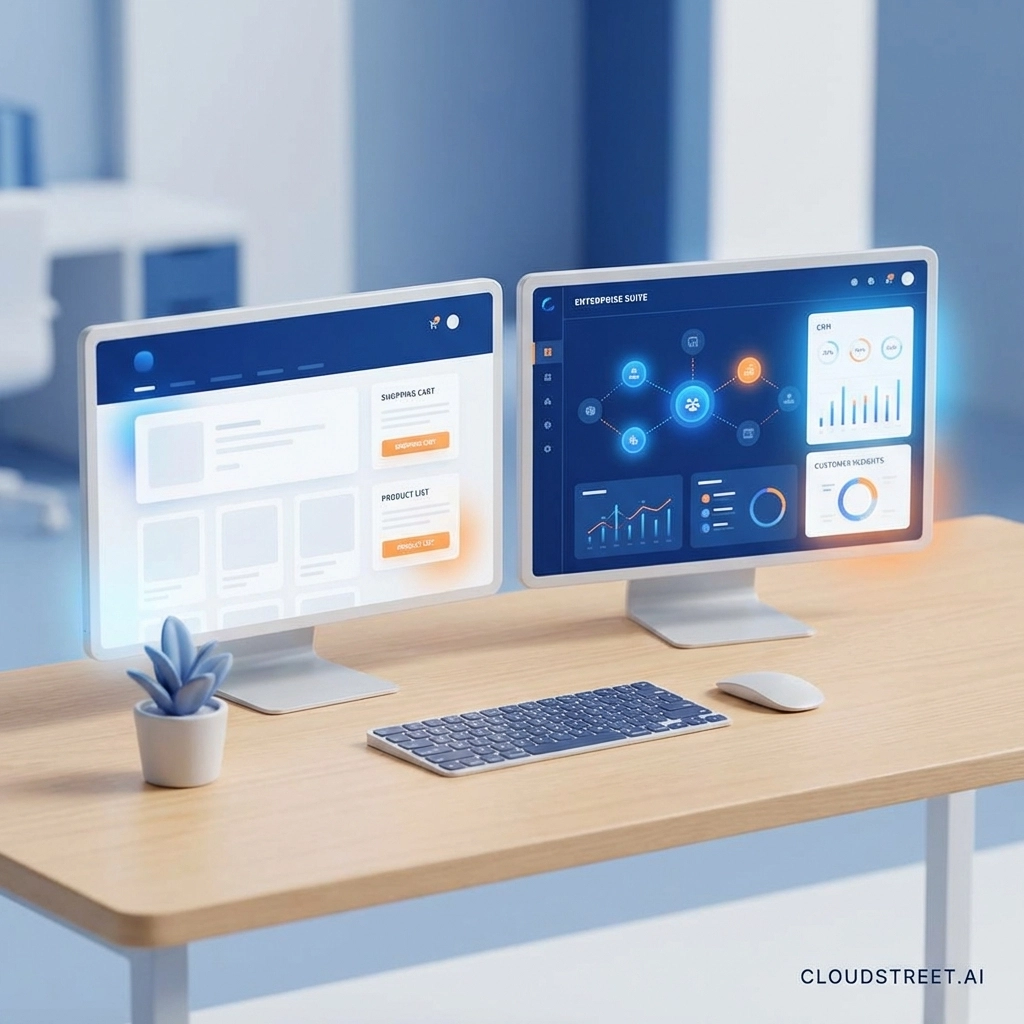
7 Key Comparison Areas for B2B Ecommerce Platforms
When evaluating any bigcommerce vs salesforce commerce cloud b2b comparison, focus on these seven critical dimensions:
1. Native CRM Integration
BigCommerce offers CRM integrations through third-party connectors and APIs. You can connect it to Salesforce, HubSpot, or other CRMs, but these connections require middleware and ongoing maintenance.
Salesforce Commerce Cloud is built on the Salesforce platform. There’s no integration needed: your commerce data, customer records, and sales activities live in one unified environment. Sales reps see order history alongside opportunities. Service agents see purchase patterns when handling support tickets.
For organizations already invested in Salesforce, this native connection eliminates data silos and reduces total cost of ownership.
2. B2B-Specific Features
Both platforms offer B2B functionality, but the depth varies significantly.
BigCommerce B2B Edition includes:
- Customer groups and price lists
- Quote management
- Purchase order support
- Company account hierarchies
Salesforce Commerce Cloud B2B includes:
- Contract-based pricing with real-time adjustments
- Custom catalogs per account or buyer
- CPQ (Configure, Price, Quote) integration
- Multi-level approval workflows
- Buyer-specific promotions and entitlements
- Bulk ordering with CSV upload
For straightforward B2B selling, BigCommerce covers the basics. For complex scenarios involving negotiated contracts, tiered pricing, and sophisticated approval chains, Salesforce offers deeper capabilities out of the box.
Ready to explore what B2B commerce looks like on Salesforce Lightning? See how Salesforce B2B Commerce Cloud works on Lightning Experience.
3. Extensibility and Customization
BigCommerce provides a flexible API-first architecture. Developers can build custom storefronts using headless commerce approaches. The app marketplace offers pre-built extensions for common needs. However, deep customizations may hit platform limitations.
Salesforce Commerce Cloud leverages the full power of the Salesforce platform: Apex code, Lightning components, Flow automation, and the AppExchange ecosystem. If you can build it in Salesforce, you can extend your commerce experience with it. This makes it exceptionally flexible for enterprises with unique business logic.
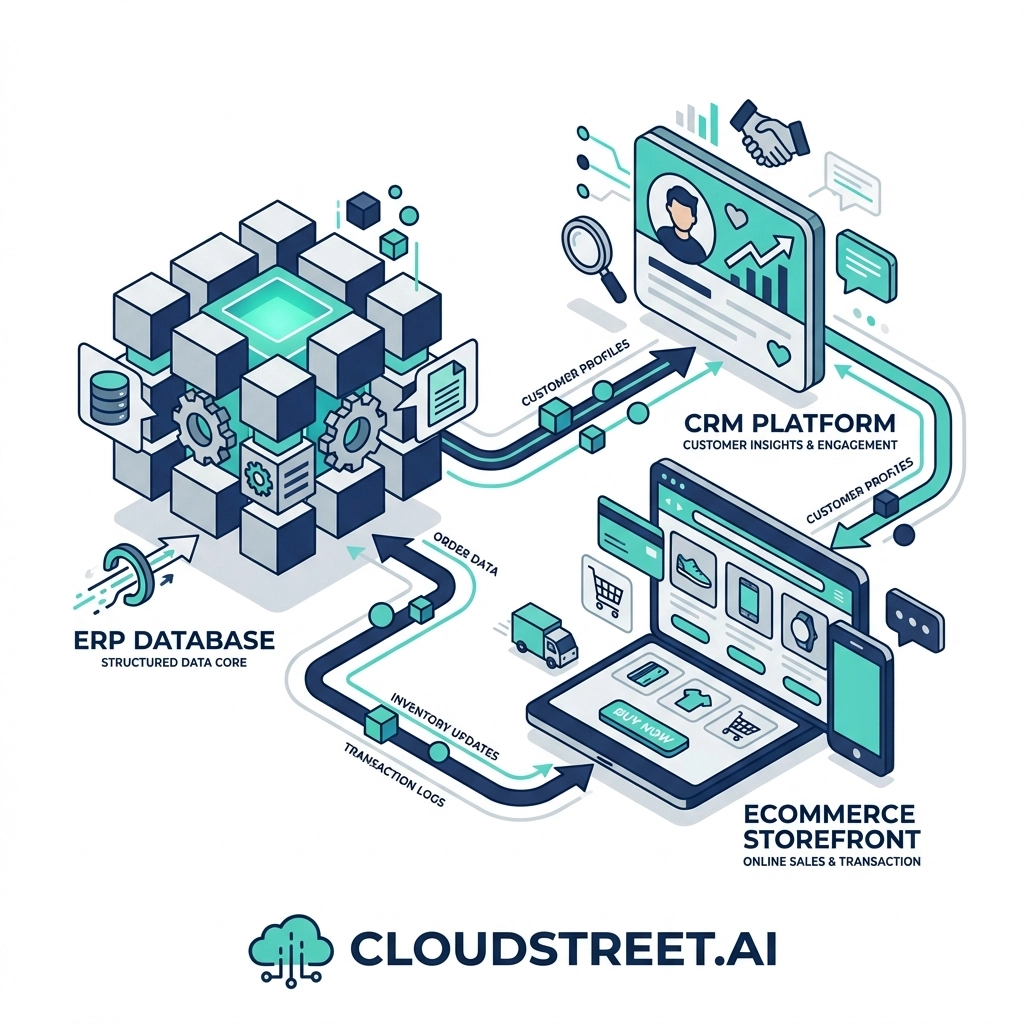
4. ERP Integration Capabilities
Both platforms connect to ERP systems, but the approach differs.
BigCommerce relies on third-party integration platforms or custom API development to sync with SAP, NetSuite, Microsoft Dynamics, or other ERPs.
Salesforce Commerce Cloud benefits from MuleSoft (a Salesforce company) and native connectors for major ERP systems. The Data Cloud capability further enhances this by unifying ERP data with CRM and commerce data for real-time insights.
For enterprises running complex ERP environments, the Salesforce ecosystem provides more robust, maintainable integration paths.
5. Pricing Models
This is where the platforms differ dramatically.
BigCommerce uses a tiered subscription model based on revenue thresholds. Pricing is transparent and predictable. The B2B Edition requires an Enterprise plan, which typically starts around $400/month but scales with transaction volume.
Salesforce Commerce Cloud uses a revenue-share or subscription licensing model. Costs are higher: often significantly so: but include platform capabilities that would otherwise require multiple point solutions.
| Factor | BigCommerce | Salesforce Commerce Cloud |
|---|---|---|
| Entry Cost | Lower | Higher |
| Pricing Model | Subscription tiers | Revenue share or license |
| Total Cost (with integrations) | Moderate | Varies by ecosystem leverage |
| Hidden Costs | Third-party apps, integrations | Implementation complexity |
The bottom line: BigCommerce offers lower upfront costs. Salesforce offers lower long-term costs for enterprises already using Salesforce products, since you avoid paying for redundant CRM, integration, and analytics tools.
6. Scalability and Performance
BigCommerce handles scale well for most mid-market use cases. The platform manages infrastructure, so you don’t worry about server capacity. However, very large catalogs or high-concurrency scenarios may require architectural planning.
Salesforce Commerce Cloud is built for enterprise scale. It supports large product catalogs, complex pricing matrices, and high transaction volumes. Global enterprises run multi-region, multi-currency operations on the platform without performance concerns.
7. AI and Future Readiness
This is where strategic differences become most apparent.
BigCommerce offers AI features through partner integrations: product recommendations, search optimization, and similar capabilities via third-party apps.
Salesforce Commerce Cloud is integrated with Einstein AI and, increasingly, Agentforce capabilities. AI-powered recommendations, dynamic pricing, predictive reordering, and autonomous commerce agents are part of the platform roadmap. The Data Cloud foundation enables these AI features by unifying customer, product, and transaction data.
For organizations planning AI-driven commerce experiences, the Salesforce path provides a more cohesive foundation.
Curious about where AI is taking B2B commerce? Read our take on agentic commerce and Salesforce AI.
Comparison Summary Table
| Capability | BigCommerce | Salesforce Commerce Cloud |
|---|---|---|
| Best For | Mid-market, simpler B2B | Enterprise, complex B2B |
| CRM Integration | Via connectors | Native |
| B2B Features | Solid basics | Deep and extensive |
| Customization | API-first, some limits | Highly extensible |
| ERP Integration | Third-party required | MuleSoft, native options |
| Pricing | Lower entry, transparent | Higher, ecosystem-dependent |
| Scalability | Good | Enterprise-grade |
| AI Capabilities | Partner-dependent | Native Einstein, Agentforce |
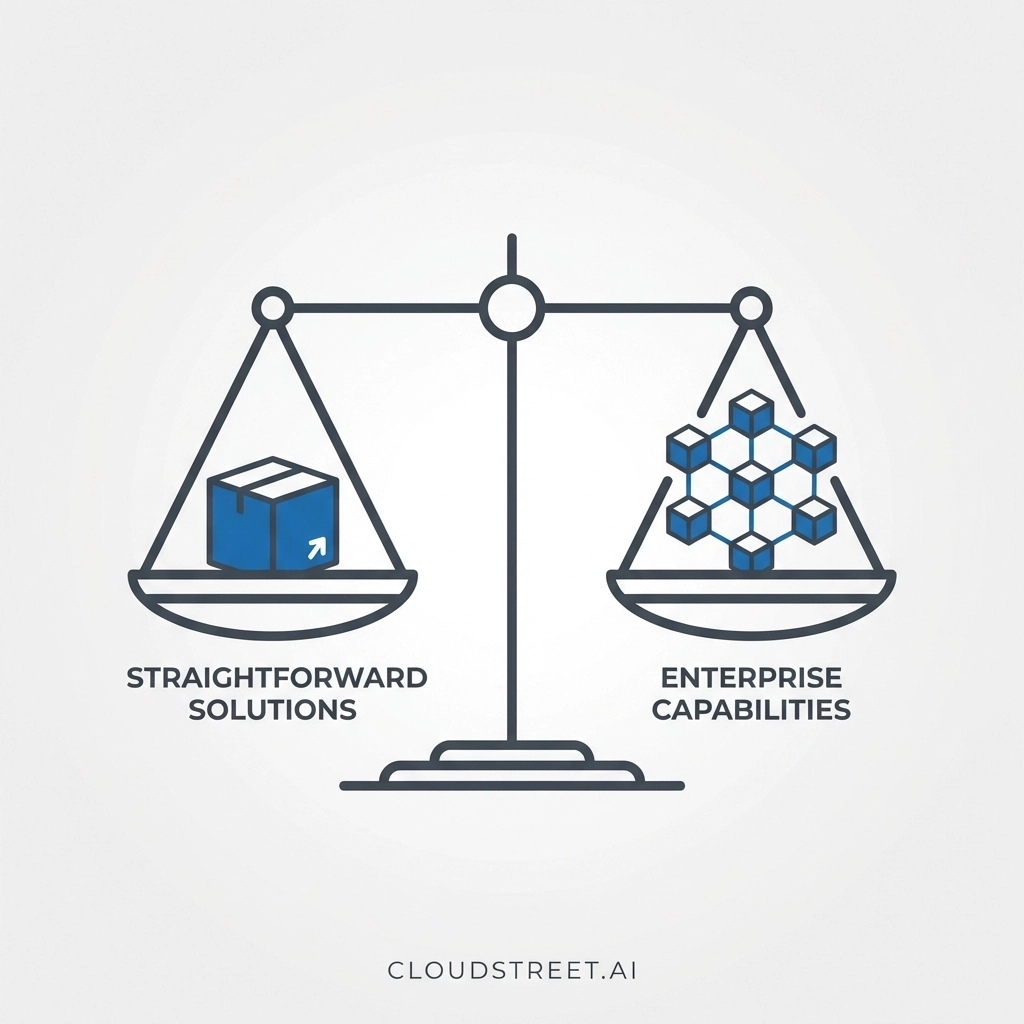
Which Platform Fits Your Business?
There’s no universally correct answer. The right choice depends on your specific situation.
Consider BigCommerce if:
- You’re a mid-market company with straightforward B2B requirements
- You need fast time-to-market with lower initial investment
- Your CRM and ERP integrations are relatively simple
- You don’t currently use Salesforce extensively
Consider Salesforce Commerce Cloud if:
- You already use Salesforce CRM or Service Cloud
- Your B2B selling involves complex pricing, contracts, and account hierarchies
- You need deep ERP integration with SAP, Oracle, or similar systems
- You’re planning AI-driven personalization and automation
- Enterprise scalability and security are non-negotiable
For many growing enterprises: especially those in manufacturing, distribution, and MedTech: the question isn’t just “which platform is cheaper today?” It’s “which platform will scale with our business and reduce friction across sales, service, and operations?”
When the answer involves unified data, sophisticated B2B workflows, and an AI-ready foundation, Salesforce Commerce Cloud tends to emerge as the stronger long-term investment.
Let’s Talk About Your B2B Commerce Strategy
Platform selection is just the starting point. Implementation approach, integration architecture, and change management determine whether your investment delivers returns.
At CLOUDSTREET, we help enterprises across Houston and around the world design, implement, and optimize B2B commerce solutions. Whether you’re evaluating platforms, planning a migration, or looking to enhance an existing Salesforce Commerce Cloud deployment, our team brings hands-on experience from dozens of complex B2B projects.
Ready to discuss your B2B commerce goals? Contact CLOUDSTREET to schedule a no-pressure conversation about what’s possible for your business.
Key Takeaways
- BigCommerce is a solid choice for mid-market companies with straightforward B2B needs and limited Salesforce investment.
- Salesforce Commerce Cloud excels for enterprises requiring deep CRM integration, complex B2B features, and AI readiness.
- Native integration with Salesforce CRM eliminates data silos and reduces long-term costs for existing Salesforce customers.
- Total cost of ownership: not just license fees: should drive your decision.
- AI and automation capabilities are becoming differentiators; Salesforce’s Data Cloud and Agentforce provide a unified foundation.
- The right platform matches your current complexity and future ambitions( not just today’s budget.)
Category
Discover insights that drive results - explore out latest blog posts now
Case Study: How Highland Cabinetry Colorado Built a Modern Wholesale Powerhouse on Salesforce B2B Commerce Cloud
In the world of high-end cabinetry, timing is everything. When [...]
Agentforce ROI: 7 Ways to Maximize Your Salesforce AI Investment
You've heard the buzz. Salesforce Agentforce is supposed to revolutionize [...]
Salesforce B2B Commerce Cloud Partner & Consultant Guide
You're about to drop serious money on a Salesforce B2B [...]